

- Reading time: Reading time: 8 min min.
How to Stop Recurring Payments: All Ways in 2026
We’ve all been there. You check your bank statement and spot a charge for that streaming service you forgot about, the fitness app you never use, or a subscription you thought you’d already canceled. It’s frustrating, but you’re not alone – and more importantly, you’re not without options.Recurring payments, also known as automatic payments, are designed to make life easier. They power the subscription model that so many services rely on today, from entertainment and software to wellness and utilities. But when you no longer need a service, stopping those charges shouldn’t feel like solving a puzzle.In this post, let’s go through every sensible way to cancel recurring payments in 2026 – whether it’s connected to your debit card, credit card, PayPal account or bank account or a mobile app. We’ll also give recommendations for what to do if things don’t go well, and how to protect yourself in the future. What Are Recurring Payments & How Do They Work? Recurring payments are auto-charges that occur come through periodically – daily, weekly, monthly or yearly. They are a favorite tool among businesses that work on subscription models, like: Streaming platforms (Netflix, Spotify) Membership services (gyms, clubs) Software & app subscriptions Utility and phone bills There are two main types: Fixed payments: The same amount is charged each cycle (e.g. Netflix plan every month). Variable payments: The amount varies, based on usage (e.g., an electricity bill). But, convenient as it is, automatic payments may also become lost in the shuffle. The good news? You have the power to stop them. Why Stopping Recurring Payments Can Be Tricky (And How to Overcome It) Before diving into the “how,” it’s worth understanding why stopping recurring payments isn’t always straightforward. Many companies design their cancellation flows to be less visible than sign-up processes – a practice sometimes called “dark patterns.” You might find the “Cancel” button buried in settings, or be offered a discount instead of an immediate cancellation.And a few give phone cancellations only during business hours or have wait times. Knowing this ahead of time at least helps you prepare: be armed with details from your account, be patient and keep at it. Besides, consumer protection laws in many areas require companies to have a clear and easy way to cancel. How to Stop Recurring Payments: Step-by-Step (2026 Edition) Image link 1. Through the Service Provider (The Direct Approach) The first and cleanest way to stop recurring payments is to cancel directly with the company: Log into your account. Navigate to Settings > Subscriptions or Billing. Select Cancel Subscription or Turn Off Auto-Renew. Save confirmation via email or screenshot. Many providers now offer instant cancellation through their website or app. If not, contact customer service by phone or chat. Be polite but firm, and note the representative’s name and the date of your request. Pro Tip: If you’re canceling because of financial hardship, many companies have retention departments that may offer pauses, discounts, or flexible payment plans. It never hurts to ask. 2. Through Your Bank or Card Issuer If the merchant is unresponsive or you can’t access your account, your bank can help. Credit/Debit Card: Call your card issuer or use their mobile app to revoke authorization for future payments. Do this at least 3 business days before the next charge. Under card network rules (Visa, Mastercard), you have the right to block future recurring charges from a specific merchant. Bank Account (Direct Debit): Contact your bank to issue a “stop payment order.” Some banks charge a small fee, but it prevents further debits. Provide the merchant name, amount, and date of the last transaction. Remember: Stopping recurring payments at the bank level doesn’t cancel your contract. You may still owe money for services already received. Always follow up with the merchant in writing to confirm the cancellation of your subscription. 3. Via PayPal, Apple Pay, and Other Digital Wallets Digital wallets frequently serve as intermediaries and can simplify the management of subscriptions all in one place. PayPal: Navigate to Settings > Payments > Manage Automatic Payments. Choose the merchant and click Cancel.You’ll receive an email confirmation. Apple Pay/Google Pay: Manage your subscriptions through your Apple ID or Google Account settings. On Apple, navigate to Subscriptions in the App Store or iCloud settings. For Google,go to the Payments & Subscriptions section of the Google Play Store. These services may also have a dispute resolution service if you are charged after cancellation. 4. For Mobile Apps & In-App Subscriptions IOS: Go to Settings > [Your Name] > Subscriptions. Android: Launch Google Play > Profile > Payments & Subscriptions. Cancel directly there. If you glance through and any charges are still there, immediately reach out to the app’s or content’s support team. Note: Uninstalling the app will not cancel a subscription. 5. If You’re Under a Contract Some services come with minimum terms (such as annual tiers, gym memberships). Check your agreement: Termination prior to expiry may cost you. You may owe something for the rest of that balance. If service is bad, take a picture (screenshot, email) and argue. Bring up relevant consumer protection laws – in some cases, companies will drop charges rather than risk escalation. Do you have any more questions? Fill out the form and we will contact you *By submitting this application, you consent to the processing of your personal data in accordance with the privacy policy. Special Scenarios: International Subscriptions and Multi-Currency Charges With more people subscribing to global services, you might face charges in foreign currencies. Here’s how to handle them: Notify Your Bank: Inform them of the international merchant to avoid fraud alerts blocking the cancellation. Use Multi-Currency Tools: Some fintech apps (like Revolut or Wise) allow you to freeze virtual cards or set spending limits per merchant. Check Exchange Rates: If disputing a charge, note the exchange rate used on the transaction date. Platforms like BillBlend, which support 70+ currencies, can also help track and manage cross-border subscriptions in one dashboard. Take Back
- Reading time: Reading time: 8 min min.
State Bank of India Payment Gateway: Review 2026
Thinking about using the State Bank of India payment gateway for your business? You’re not alone. As India’s largest public sector bank, SBI’s name carries trust and reach. But does its digital payment solution live up to the expectations of modern businesses in 2026? Let’s break it down together – no jargon, just real talk. First Impressions: The Legacy of Trust When you hear “State Bank of India,” you think of security, stability, and a branch in almost every pin code. That’s the biggest strength of the SBI bank payment gateway – instant credibility. If your customers are familiar with SBI, they might feel more comfortable seeing its name at checkout. It’s like having a veteran guard at your digital doorstep. How It Works & Who It’s For The payment gateway of SBI bank, called SBIePay, is designed primarily for Indian businesses that already bank with SBI. The setup is straightforward if you’re an existing customer. You get access to a merchant portal where you can track transactions, which settle within a reliable T+2 working days cycle. For small local shops or service providers who want to start accepting online payments without switching banks, this can be a convenient first step. Pricing and Charges Understanding the cost structure of a payment solution is crucial for any business. Below is an overview of typical charges associated with SBIePay, based on publicly available information. Please note that fees are subject to change and may vary based on your business category, transaction volume, and negotiated terms with the bank. Always confirm the final pricing with an SBI representative. Fee Type Typical Charge/Details Setup Fee Often waived for existing SBI customers; may apply for specific premium packages. Annual Maintenance Fee (AMC) Can range from ₹1,000 to ₹10,000+ per annum, depending on the plan and features. Transaction Fee (Domestic) A common model is a % of transaction value + GST. Rates typically range from 1.8% to 2.5% for cards (credit/debit) and net banking. Transaction Fee (International) Generally higher, often in the range of 3.5% to 4.5% + GST. Settlement Period Standard is T+2 working days (transaction day + 2 business days). Refund Charges A processing fee per refund transaction may apply, or the initial transaction fee might not be refunded. Chargeback Fee A significant penalty fee (e.g., ₹500–₹1000 per instance) is typically charged if a customer disputes a transaction. SBIePay vs. Other Popular Payment Solutions While SBIePay offers the trust of a national bank, modern businesses often evaluate it against other agile and feature-rich gateways. Here’s a comparative look at key players in the Indian market, including BillBlend, to help you choose the right fit. Feature / Aspect SBIePay (SBI Bank Gateway) Razorpay Paytm Payment Gateway BillBlend Core Identity Legacy banking institution’s gateway. Modern, developer-first fintech. Ecosystem giant (payments to commerce). Global subscription & billing specialist. Best For Existing SBI customers, traditional businesses seeking brand trust. Startups, tech companies, online businesses needing seamless integration. Businesses targeting mass Indian consumers, leveraging Paytm’s vast user base. Businesses with global customers, SaaS, subscriptions, and recurring revenue models. Key Strength Perceived trust & stability, direct settlement to SBI account. Excellent UX/UI, wide range of APIs, extensive documentation, quick onboarding. High consumer recognition, integrated with Paytm wallet & UPI. Unified dashboard for 70+ currencies & 100+ payment methods, deep subscription management tools. Integration Standard integration; may feel less modern. Highly developer-friendly with SDKs, plugins, and APIs. Plugins for major platforms; strong UPI focus. APIs focused on recurring billing, invoicing, and global payment orchestration. Pricing Model Slab-based, often negotiable for high volume. Transparent, published pricing; competitive rates (e.g., ~2% per transaction). Competitive, often bundled with other Paytm services. Value-based, tailored for subscription businesses; includes advanced billing features. Global Reach Primarily focused on domestic (INR) transactions. Supports international cards but not a core strength. Domestic-first, with some international payment support. Very domestic-focused (India). Built for global: collections, payouts, and multi-currency subscription management are core. Unique Offering The security and relationship backing of India’s largest bank. Payment pages, payment links, subscription suite (Razorpay Capital for loans). Paytm Postpaid (BNPL), QR code ecosystem. Holistic platform to manage the entire customer billing lifecycle globally, reducing financial ops complexity. Final Takeaway:Choosing a payment gateway depends on your business model. SBIePay is a solid, trustworthy choice for traditional businesses deeply embedded in the SBI ecosystem. For digital-native brands, Razorpay offers agility. To capture the mass Indian market, Paytm provides immense reach. If your business runs on subscriptions and serves customers worldwide, BillBlend is purpose-built to handle the complexity of recurring revenue, foreign exchange, and unified financial operations, turning global payments from a challenge into a competitive advantage. Image link The Strengths: Where SBI Excels Security and Trust of a Legacy BankSBI isn’t just a bank; it’s an institution woven into India’s financial fabric. For many customers, especially those cautious about online payments, seeing the SBI logo at checkout is like spotting a familiar face in a new place – a signal that says, “This is legitimate.” This trust is backed by standard security certifications, encryption, and mandatory two-factor authentication for cards. In short, SBIePay is a conservative but deeply reliable choice. Transparent and Predictable FeesIn a world where fees are often buried in fine print, SBI offers a clear pricing structure. This helps businesses budget without unpleasant surprises. For instance, net banking and IMPS transactions here have traditionally been affordable – a fixed fee per transaction. For companies that are already SBI customers, card processing rates are often among the most competitive on the market. That said, it’s always best to confirm exact figures with your bank manager, as they can vary based on your business volume. Seamless Fit for Existing CustomersIf your current account is already with SBI, integrating their payment gateway feels like the most natural step. You’re dealing with a familiar bank, familiar managers, and minimal new paperwork. Most importantly, all customer payments settle directly into your primary SBI account on a predictable schedule (typically transaction day + 2 working days). There’s no

- Reading time: Reading time: 9 min. min.
Online payment methods in Argentina
Argentina ranks among South America’s leaders in economic scale, digitalisation, and e‑commerce. The online payment market has been growing fast lately. Local analysts say about 85 % of internet users have bought something online at least once – and electronic payments keep gaining ground each year.But this progress has its own peculiarities. Argentina’s economy and consumer habits add a few twists to the story. For years, the country has dealt with: high inflation; strict currency controls; limits on international transactions. predictable revenue. These hurdles pushed people to look for alternatives – from local e‑wallets to mobile apps letting them pay without traditional banks.Nevertheless, cash has not lost its popularity. Older folks and people in small towns still trust it most. So today’s market is a mix of payment methods: classic card payments; interbank transfers; cash payments via intermediaries payment in cryptocurrency; digital wallets with QR codes. This variety makes Argentina’s market especially appealing – both for locals and international businesses eyeing a foothold here. Popular online payment methods in Argentina The main online payment methods in Argentina. Credit and debit cards Mastercard and Visa are traditional international systems that are widely used in Argentina. They are accepted by most online retailers and offline stores.Key features: Widespread use. More than 80% of online retailers support card payments. Security. EMV chip technology and 3D Secure protocols protect transactions. Flexibility. Consumers can use credit, debit or prepaid cards. Despite their popularity, card payments face limitations due to currency controls and high acquiring fees, which some merchants pass on to customers. MercadoPago MercadoPago is a popular electronic payment system in Argentina, occupying about 65% of the market. It is integrated with almost all major merchants and supports payments via cards, bank accounts and cash.Key advantages: Seamless integration with MercadoLibre, Argentina’s largest e-commerce platform. QR code payments in offline stores. Installment plans for expensive goods. Low fees for merchants. These criteria will help you choose the best way to accept recurring transactions. Rapipago and Pago Fácil These cash payment networks cover more than 9,000 locations (petrol stations, shops, pharmacies, etc.), allowing customers without bank cards or accounts to make transactions.Key advantages: Accessibility. They operate in remote areas. Finality. Payments are irreversible (no chargebacks). Simplicity. Customers receive a voucher to pay for online orders in cash. These systems are especially popular in regions where there are problems with traditional banking methods. Approximately 15% of the country’s population has limited access. International e-wallets Skrill, Neteller, MuchBetter and Payz e-wallets are very popular in Argentina. They are chosen for quick registration, the ability to pay without identification, and simple verification to increase limits. Electronic wallets are used for international transactions, replenishment of accounts in casinos and bookmakers, payments in online games and settlements with freelancers. Local digital wallets and mobile apps New fintech solutions such as Uala, Lemon Cash, and Buenos Aires Wallet are gaining popularity. These apps offer: instant P2P transfers; bill payments; integration with cryptocurrencies (e.g., stablecoins to protect against inflation); loyalty programmes. For example, Uala has over 5 million active users and partners with major retailers. Crypto Payments Argentina Payment in cryptocurrency is becoming more popular in Argentina.This is due to high inflation in the country and the popularity of shopping abroad in Argentina. The use of stablecoins such as USDT and USDC allows for international trade, as well as the use of crypto payments for purchases within the country.Key factors of popularity growth: Protection against inflation. Argentines use cryptocurrencies to preserve their purchasing power amid the rapid devaluation of the Argentine peso. Cross-border transfers. Cryptocurrency allows you to send money transfers and make international payments quickly and with low fees without the involvement of traditional banking intermediaries. Financial accessibility. Digital assets open up access to financial services for people without bank accounts or with limited access to banking services. E-commerce. Some online merchants accept cryptocurrencies to avoid high card payment processing fees and currency restrictions. Crypto payments are positioned as a viable alternative in Argentina’s changing financial landscape — especially for those seeking protection from inflation and the ability to conduct cross-border transactions. Regulatory environment and compliance Argentina’s economy landscape is shaped by strict regulations. The Central Bank of Argentina (BCRA) controls all financial transactions. Exchange controls restrict foreign currency transactions. Tax reporting is mandatory for companies with a turnover of more than 100,000 Argentine pesos per month.Recent changes: Mandatory use of electronic invoices (CFDI) for all online sales Tighter AML (anti-money laundering) checks for cross-border payments Do you have any more questions? Fill out the form and we will contact you *By submitting this application, you consent to the processing of your personal data in accordance with the privacy policy. Payment gateways in Argentina Payment gateways ensure transaction security using advanced data protection technologies. They use: Encryption to protect card data and personal information; Tokenisation to replace sensitive data with unique identifiers; Fraud detection algorithms to prevent unauthorised access. The leading gateways in Argentina are BillBlend, MercadoPago Checkout, Pagomío, Red Pagos, and PayU Latam. These gateways act as intermediaries between banks, merchants, and consumers, reducing the risk of financial fraud. Optimise your finances with BillBlend: get a personalised solution for your business today. Trends and prospects When planning to open or expand a business, it is important to assess the development prospects and trends in payment methods in Argentina. Expansion of QR code payments More and more retailers are implementing QR codes for contactless payments thanks to MercadoPago and local banks. Acceptance of cryptocurrencies Stablecoins (e.g., USDT) are increasingly being used for cross-border transfers and inflation protection. Open banking The BCRA is testing an open banking API that could allow third-party fintech companies to securely access banking data. Biometric authentication Facial recognition and fingerprint scanning are being tested for high-risk transactions. Cross-border payments New partnerships with global providers (e.g., Wise, PayPal) could simplify international transfers. Statistics on payment methods in Argentina As of 2025, bank cards remain the main means of payment. They account for 54% of all transactions. Local cards occupy a
- Reading time: Reading time: 15 min. min.
Safe and fast payment methods for online betting sites
When it comes to transferring money and placing bets online, bankroll management (money) is one issue you’ll have to address for sure. Choosing the right online betting payment methods is not just about convenience – it’s about security, speed, and a seamless gaming experience from your bank account to the sportsbook and back. With a plethora of payment options, whether you’re with the classic credit card or all aboard the cutting edge crypto train, finding the right fit can be daunting.This post will take you through the world of betting payment methods in 2025. We’ll weigh the advantages and disadvantages of each choice, reveal the quickest ways to receive your winnings, and arm you with the info you need to make a good decision with respect to landing on that one payment method that, in addition to giving you peace of mind for having made a sound financial move, will ensure your money remains at arms’ reach. Introduction to Betting Payment Methods At its core, a payment method for betting sites is simply a bridge between your personal funds and your gaming account. But this bridge varies greatly. Some are superhighways (instant eWallet deposits), while others are scenic routes (bank transfers that take days). The best online betting platforms offer a diverse menu of these options because they understand that one size does not fit all. Your choice affects everything from transaction speed and privacy to eligibility for bonuses and even which sites you can play on. Understanding the variety of sports betting payment methods is the first step to a seamless experience. How Payment Gateways Work You might not see them, but payment gateways are the essential engines processing every transaction. When you click “deposit,” the gateway securely encrypts your financial data, authorizes the transaction with your bank or eWallet, and confirms the funds have moved to the sports betting operator. Think of them as the trusted, digital cashier. A reliable gateway ensures this process is not only fast but also fortified with layers of security like encryption and fraud screening, protecting your sensitive details from start to finish. Popular Payment Providers and Methods Let’s break down the most common families of payment methods you’ll encounter on betting sites, exploring the unique traits of each. Debit and Credit Cards The old reliables. Visa and MasterCard debit cards are almost universally accepted for both deposits and withdrawals. They’re familiar, straightforward, and transactions are usually instant. Credit cards, however, are on shakier ground. Many regions, including several U.S. states, have restrictions on using credit for online betting due to responsible gambling concerns. Even where accepted, credit card withdrawals are rare – you’ll typically need another method to cash out. eWallets These digital wallets act as a middleman, shielding your bank details from the betting sites. PayPal is a giant here, known for its robust buyer protection and speed. Skrill and Neteller are also staples in the gaming industry, especially in Europe. They offer instant deposits, relatively fast withdrawals, and their own prepaid card options. For many, the extra layer of privacy and control makes eWallets a top choice. Pay by Mobile This method charges your deposit directly to your monthly phone bill or prepaid balance. It’s incredibly convenient for small, quick deposits. However, limits are usually low, and it’s rarely available for withdrawals. It’s perfect for topping up your account on the go without reaching for your wallet. Prepaid Cards and Vouchers Paysafecard is the champion in this category. You buy a voucher with cash at a retail store and use the unique PIN to fund your account. It’s the ultimate tool for anonymity and strict budgeting, as you can only spend what you’ve pre-purchased. Other options like Play+ are reloadable prepaid cards specifically branded for the gaming industry, offering a good blend of control and convenience. Bank Transfers The direct approach. Bank transfers like ACH (in the US) or SEPA (in the EU) are trusted for moving larger sums securely. They are a direct line from your bank to your betting account. The trade-off is speed: deposits can take hours, and withdrawals often take 3-5 business days. They are a go-to for high rollers who prioritize security over immediacy. Cryptocurrency Payments This is the frontier. Using crypto payment gateways like NOWPayments, betting platforms can accept Bitcoin, Ethereum, and hundreds of other digital currencies. The advantages are compelling: transactions are pseudonymous, incredibly fast (often within minutes), and come with very low fees. For tech-savvy bettors who value privacy and modern finance, crypto is becoming a preferred payment method. Advantages and Disadvantages of Payment Methods Cards: — Pros: Universal, instant deposits. — Cons: Credit cards often restricted; withdrawals to debit can be slow. eWallets: — Pros: Fast, secure, great for privacy. — Cons: May have fees for currency conversion or transactions. Mobile Billing: — Pros: Ultimate convenience. — Cons: Low limits, no withdrawal option. Prepaid Cards/Vouchers: — Pros: Excellent for anonymity and budget control. — Cons: Often cannot be used for withdrawals; can be less widely available. Bank Transfers: — Pros: High security, high limits. — Cons: Slow processing times. Cryptocurrency:— Pros: Top-tier speed, low fees, enhanced privacy. — Cons: Price volatility, learning curve for new users. Fees and Limits for Popular Payment Methods Always check the fine print! While many deposits are free, some eWallets and bank transfers may incur small fees. Withdrawals are more commonly subject to fees, especially for expedited options. Limits also vary wildly: mobile and voucher methods may cap deposits at a few hundred dollars, while bank transfers can accommodate tens of thousands. Your chosen betting site will have a dedicated banking page outlining all specifics. Regional Availability of Betting Payment Options Where you live dictates what you can use. PayPal is dominant in the UK and US, while Skrill and Neteller are European favorites. Paysafecard is huge in Germany and Austria. In some parts of Asia and Latin America, localized eWallets and even cash-based options reign supreme. Cryptocurrency is borderless by nature, making it a

- Reading time: Reading time: 12 min. min.
AI in customer service: benefits, examples and use cases
Modern user support is undergoing a profound transformation thanks to AI in customer service. The use of modern technologies makes it possible to solve common problems in the work of technical support. Neural networks make it possible to respond quickly and around the clock, constantly analyze user requests and look for patterns in them. Using AI in customer service is becoming a necessity rather than following a popular trend. We will discuss the real benefits, specific examples of implementation, and strategies for the effective use of AI in customer service. What is AI in customer service? Artificial intelligence in the client service allows using modern technologies to communicate with users. User support services use machine learning, natural language processing, automation, and generative AI to study a query and select an answer to it. The main task is to speed up the speed of responses and improve their accuracy.The most common forms of AI application are: Chatbots and virtual assistants. They respond to typical customer requests, reduce the burden on specialized specialists, which increases the efficiency of the support service. Predictive analytics. Analyzes customer behavior and looks for patterns in it.This allows you to predict possible problems and take measures to solve them in advance. Automation of work processes. Speeding up routine tasks. This can be updating CRM records, sending notifications, maintaining customer communication reports, and other tasks. Sentiment and behavioural pattern analysis. Helps to better understand customer emotions and preferences, forming the basis for effective communication. Modern AI goes beyond simple programming and learns from every interaction, adapting to unique scenarios and individual customer characteristics. Advantages of AI in customer service The popularity of AI in working with clients is based on the advantages that businesses receive. Speed and continuity of support 24/7 availability. AI services operate around the clock, eliminating delays and ensuring immediate responses to requests.Minimisation of waiting time. Automating the first steps of request resolution reduces the average processing time by 30-50%.Quick response to spikes in activity. AI is easily scalable, supporting high volumes of requests without increasing staff numbers. Cost efficiency Reduced operating costs. Automating simple tasks frees you from hiring additional staff. This can result in up to 30% savings on labor costs.Budget optimisation. Reducing operating costs frees up funds for business development, closing current debts and increasing profitability. Improved customer experience Personalization. AI analytics makes it possible to analyze previous customer requests and offer personalized suggestions. This increases the conversion rate, as users get what they were previously interested in.Increased satisfaction. Personalised support increases CSAT by 15–20%.Empathetic approach. Modern AI models can determine the customer’s emotional state and adapt their communication style accordingly. Operator optimisation Freedom from routine. Automating standard procedures allows specialists to focus on complex and creative tasks.Support in decision-making. AI suggestions and prompts speed up request processing and reduce the likelihood of errors.Professional development. Employees have more time for self-development and learning new skills. Analytics and forecasting Identifying hidden trends. AI analytics detects patterns invisible to the human eye, allowing you to prepare for changes in demand in advance.Evaluating campaign effectiveness. Analyses the success of marketing initiatives and adjusts strategy in real time.Risk management. Warns of potential problems and failures, allowing proactive measures to be taken. Examples of artificial intelligence in customer service Let’s look at some examples of AI in customer service: Chatbots and virtual assistants. Answer frequently asked questions such as ‘Where is my order?’ and ‘How do I return an item?’ They route complex requests to the appropriate specialists. They integrate with CRM for access to customer data. Predictive analytics. Predicts customer churn based on behaviour patterns. Recommends products: ‘Customers who bought this item also bought…’. Assesses the likelihood of cross-selling success. Natural language processing. Analyses the tone of reviews: highlights negative comments for urgent response. Automatically tags requests: ‘complaint,’ ‘delivery question.’ Translates texts in real time for multilingual support. Workflow automation. Fills out refund forms. Generates responses based on a knowledge base. Updates order statuses in systems. Voice AI assistants. Interactive voice menus: ‘Say “balance” to find out your balance.’ Speech recognition in call centres: transcribing conversations, highlighting key phrases. Voice assistants for booking services: table reservations, doctor’s appointments. These examples of artificial intelligence in customer service show how widely the technology has been adopted and how it simplifies customer interactions. Cases of AI use in customer service International experience shows that artificial intelligence has become an integral part of customer service in various sectors of the economy. Below are some striking examples of the successful implementation of AI technologies in foreign companies. E-commerce One of the world’s leading e-commerce companies, Amazon, has implemented an AI-based personalisation mechanism called Amazon Personalise. This technology has revolutionised product recommendations by using generative AI to create a unique user experience. As a result, the company increased its sales by up to 35% compared to organisations that do not use such personalisation.The American company US Foods Inc., which is engaged in wholesale food distribution, has successfully applied AI to optimise its e-commerce. As a result, sales grew by 6.4% compared to the previous year, reaching $37.877 billion in 2024. Telecommunications Telecommunications giant Verizon has implemented an AI assistant, developed based on Google models, to support its customer service employees.This has resulted in a significant reduction in the length of phone calls and freed up staff time for active sales. In just one year, sales through the customer service department have grown by almost 40%. Spanish telecommunications company Telefónica has implemented its own project called Kernel, using Next Best Action AI Brain technology, which analyses customer behaviour and offers personalised recommendations.This innovation resulted in an increase in sales of almost 20% and a growth in the conversion rate of approximately 30%. Financial sector The well-known American financial conglomerate JPMorgan Chase has successfully used artificial intelligence tools to maintain sales volumes to its wealthy clients even during periods of serious economic turmoil. Mary Erdoes, CEO of the division, emphasised that advanced AI tools helped financial advisors respond quickly to market changes and
- Reading time: Reading time: 9 min. min.
Instant cross border payments
The speed of transactions is becoming a key advantage in the calculations of international companies. Now Instant cross border payments is no longer a luxury – it is a necessity that changes business processes and allows businesses to compete in new markets. What are instant cross-border payments? Cross-border payments are financial transactions carried out between parties located in different countries. These transactions include a wide range of settlements: payment for goods and services to foreign suppliers; receiving cash inflows from foreign buyers; transferring salaries to employees working abroad; private transfers to relatives living outside the sender’s country of residence. Until recently, such settlements were carried out mainly through traditional banking infrastructure, such as correspondent networks and the SWIFT system. This method was characterised by significant time costs (usually 3–5 business days), high commissions, and the need to go through numerous stages of control and currency conversion.However, the development of digital technologies has led to the emergence of a fundamentally new format: cross-border instant payments. Today, such transfers are made in a matter of minutes, often even around the clock, opening up completely new horizons for businesses of all sizes. Technologies shaping the future of financial flows Modern solutions are based on cutting-edge technologies: API integration: allows you to instantly connect payment instruments to your internal management systems. Blockchain and distributed ledgers: guarantee security, transparency and high transaction processing speeds. Artificial intelligence: automates compliance checks (KYC/AML), minimising the human factor and speeding up procedures. Local payment infrastructures: integration of national systems speeds up payments and reduces fees. Advantages of instant cross-border payments for businesses The use of innovative instruments brings tangible benefits to businesses in a number of areas. The use of innovative instruments brings tangible benefits to businesses in a number of areas. The ability to respond quickly to suppliers’ needs, which helps to obtain early payment discounts in a timely manner. Reduction in the time it takes to receive sales revenue, improvement in liquidity indicators. Significant reduction in dependence on credit lines and overdrafts. Expansion of geographical presence Small and medium-sized businesses get the chance to enter the international market without significant initial investment. It becomes possible to offer customers a convenient payment method that is familiar to a particular country. Creation of competitive advantages through fast service and favourable terms. Significant reduction in operational risks Losses caused by currency fluctuations during long waits for transfers to be completed are eliminated. The risks of partners failing to fulfil their contractual obligations due to technical delays are minimised. Errors that arise when manually checking large numbers of documents are eliminated. Increased customer satisfaction 24/7 availability of payment services. Immediate feedback on the status of the transaction. Clear fee structure and no hidden costs. Support for multiple currencies and payment methods. Popular modern solutions for instant cross-border payments Today, there are a number of effective tools that allow businesses to take advantage of immediate transfers: SWIFT gpi (Global Payments Innovation) – an improved version of the classic SWIFT system, providing real-time payment tracking and fast crediting of funds on most routes. National instant payment systems – such as the British Faster Payments, Brazilian PIX, Indian UPI and others, which combine the efforts of local regulators and commercial organisations. FinTech company platforms – specialised services that use the latest technologies to reduce fees and increase transaction speeds. Stablecoins and cryptocurrencies – digital assets backed by real currencies, allowing for almost instant transfers without the involvement of traditional banking infrastructure. Visa Direct and Mastercard Send card payment system services – provide fast transfers of funds directly to the bank cards of individuals and legal entities around the world. Industries that benefit most from instant payments Some areas of activity are particularly susceptible to changes in cross-border transactions: E-commerce. Reduction in the number of uncompleted orders caused by long waits for payment confirmation, fast payment of rewards to affiliates and contractors. International logistics and supply chains. Ability to accurately plan production and delivery of products thanks to guaranteed timely payments. Consulting and professional services. Immediate invoicing and payment for services rendered, strengthening of partnerships. Gig economy and freelancing. Ensuring fair remuneration for contractors regardless of their geographical location. Export and import operations. Simplify document flow and speed up settlements with foreign buyers and suppliers. Want to experience the convenience of instant cross-border payments? Try BillBlend, our API-integrated platform that provides transfers in 70+ currencies with transparent rates and 24/7 support. Sign up for a free consultation to learn how we can simplify your international payments. How to implement instant cross-border payments Step-by-step algorithm: Step 1. Evaluate your needs. Identify transaction volumes, currencies, and target markets. Identify the key requirements – speed, cost, and compliance with regulations. Step 2. Select a provider. Compare the commissions, supported countries, and integration opportunities. Evaluate the security measures – encryption, fraud detection. Check for compliance with AML/KYC and GDPR requirements. Step 3. Integrate API solutions. Work with the IT team or a third‑party developer to integrate the provider’s API into ERP/CRM systems. Test in sandboxes to ensure a smooth data flow. Step 4. Train the staff. Provide training on new workflows, dispute resolution, and fraud prevention. Appoint a compliance officer to monitor regulatory updates. Step 5. Run and monitor it. Start with a pilot program for low-risk transactions. Track key indicators: percentage of successful transactions, average processing time, and customer reviews. Scale up after the integration issues are fixed. Hotels and airlines can issue instant refunds or vouchers, reducing inconvenience for customers. Real implementation cases PayNow‑UPI (Singapore–India). The technology is compatible between Singapore’s PayNow system and India’s Unified Payments Interface (UPI). The advantage is instant transfers by phone number without the need to specify bank details. The effect is a 40-60% reduction in transaction costs compared to traditional methods, and popularity for money transfers and small B2C.IXB (EUR–USD instant payments). The participants are EBA Clearing and SWIFT, more than 25 financial institutions. Using SWIFT and EBA RT1 infrastructure for round–the-clock EUR-USD transfers. Advantage – calculations in seconds with full
- Reading time: Reading time: 11 min. min.
Instant card payment: fast and secure transactions
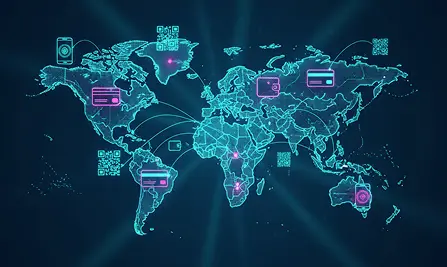
The speed and security of financial transactions come to the fore in business development. Instant card payment has become a solution that allows companies and individuals to transfer funds in real time. We explain how instant card transfers work, what advantages they offer to users, and how to integrate them into existing business processes. What is instant card payment? Instant transfer by card is a financial transaction mechanism in which funds are credited to the user’s card instantly. The transfer process takes a few seconds. Traditional bank transfers can be processed quickly, but they are based on a processing time of 1-5 business days. This is inconvenient and takes a long time, especially if the funds are needed now. It is for this reason that businesses and users are increasingly choosing cards with instant financial transaction processing. To connect the service and conduct transactions, the technology uses modern payment gateways, APIs for direct interaction with VISA, American Express and other card networks and issuing banks.When a payment is initiated, the system performs the following: When a payment is initiated, the system performs the following: Verification of the recipient’s card details. Checking the validity of the transaction and the available balance. Protect the transaction using encryption and anti-fraud tools. Instant transfer of funds to the card if all checks are successfully completed. Key features and benefits Instant payment cards have advantages that make this payment method beneficial for businesses and users. Real-time payments The main advantage is speed. Whether you are paying a contractor, refunding a customer or transferring funds to a friend, instant card payments ensure that the recipient sees the money almost immediately. Global coverage and support for multiple currencies Modern real-time payment platforms work with 70+ currencies, enabling cross-border transfers without the delays and high fees associated with SWIFT. Companies can pay foreign partners or employees in local currency with minimal conversion costs. Easy integration APIs and SDKs allow instant card payments to be embedded directly into applications, websites or ERP systems. Compatibility with major card networks such as Visa and Mastercard guarantees reliability and versatility. Enhanced security Teal-time card payments use: end-to-end encryption; tokenisation (replacing card details with unique tokens); 3D Secure 2.0 technology for additional authentication; AI fraud detection systems. Wide range of payment methods Support for 100+ payment methods gives users the opportunity to choose their preferred option: debit, credit or prepaid card, digital wallets or local payment systems. How instant card payments work The basis of instant payments: Payment orchestrators – intermediary software that directs transactions to the optimal payment channel. Card networks (Visa, Mastercard and local systems) process the transaction. Issuing banks verify the validity of the card and the availability of funds. Acquirers/payment providers ensure the transfer of funds from the sender to the recipient. The credit card payment instant process. The system sends a request via API, specifying the recipient’s card number, amount and currency. The payment orchestrator verifies the request and selects the optimal processing path. The card network forwards the request to the issuing bank. The issuing bank approves or declines the transaction based on the card status and available funds. Upon approval, the funds are credited to the recipient’s card account within seconds. Areas of application Real-time transfers have a wide range of uses. E-commerce Instant refunds increase customer loyalty: buyers see the money on their card immediately, rather than after several days. Gig economy Freelancers and on-demand workers receive payments instantly after completing a task, improving cash flow management. Tourism and hospitality Hotels and airlines can issue instant refunds or vouchers, reducing inconvenience for customers. Payroll It is a payroll management system that automates the payroll process for employees. It covers the accounting of time worked, the calculation of salaries, bonuses, deductions and taxes. The calculation can be carried out both internally and with the help of an external provider. B2B supply chains Businesses build supply chains with fast payments. This allows you to plan production, replenish stocks in a timely manner, and control transportation. By reducing costs and improving the visibility of vehicle movement, the efficiency and automation of all processes are increased. Compliance with standards and regulations Immediate card payments must comply with: PSD2 (Europe) – requires strong customer authentication (SCA). PCI DSS – ensures secure card data processing. Local regulations – some countries have specific requirements for reporting cross-border transfers. Providers usually take responsibility for compliance, offering businesses a ready-made solution. Instant card payment trends 2025 The main trends include the expansion of the use of RTP and FedNow systems in the United States, global growth in transaction volume, the development of mobile wallets and Open Banking. Growth in the volume of instant payments According to Juniper Research, the global volume of instant transactions will increase from $22 trillion in 2024 to $58 trillion by 2028, reflecting an increase of 161%. This growth is due to the increased use of account-to-account (A2A) wallets (for example, iDEAL, Twint) and the development of Open Banking, which allow transactions to be carried out directly from bank accounts, bypassing traditional card systems. Development of RTP and FedNow systems in the USA RTP and FedNow are two key immediate payment systems in the USA. RTP is operated by The Clearing House, and FedNow is operated by the Federal Reserve System. As of 2025, about 58% of banks in the United States that support instant transactions use both systems simultaneously, which has become standard practice to ensure sustainability and expand coverage.FedNow processes domestic payments in the United States around the clock, with immediate settlement and instant transfer of funds. The FedNow transaction limit has increased from $25,000 at launch to $10 million by November 2025. RTP supports transactions of up to $1 million and uses the ISO 20022 standard to transfer rich data (for example, account numbers, account references). The growth of Mobile Wallets and Open Banking The mobile wallet segment is expected to grow from $12.85 billion in 2026 to $104.69 billion by 2033, with a compound annual
- Reading time: Reading time: 13 min. min.
Most popular online payment methods by country
Online payments have long ceased to be just a way of paying — they are now an integral part of everyday life for billions of people around the world. But despite the general digitalisation, approaches to payment vary greatly depending on the region.What is familiar to residents of Europe or North America may not be suitable for users in Asia or Latin America. Therefore, the right choice of payment methods is key to the success of any company planning to enter the international market.Today, we will look at the most popular online payment methods by country and find out what factors influence the choice of one method or another. This will allow us to form a comprehensive picture of the situation on the global market and provide practical recommendations for adapting payment solutions for business. Global trends in online payments Rapid development and constant changes are familiar companions of the modern online payment market. The high dynamics of the industry is influenced by the widespread use of smartphones and mobile devices, the active development of payment infrastructure, and increased confidence in non-bank payment technologies.Among the most popular online payment methods, several groups stand out: Bank cards (credit and debit) remain the leader in Western countries, but are gradually losing ground in the Asian region. Digital wallets (such as Apple Pay, Google Pay, Alipay) are showing impressive growth thanks to their convenience and level of security. Direct bank transfers (SEPA Credit Transfer, Automated Clearing House) are particularly popular in Europe and Latin America. Mobile payments (SMS, QR codes) are gaining recognition mainly in developing countries. Cryptocurrencies remain a niche category, but one that has been actively expanding in recent years. According to forecasts by research company Juniper Research, by 2030, the volume of contactless payments will exceed $18,1 trillion, with digital wallets accounting for about 40% of all online transactions. The most popular credit cards and online payment methods Here are the 10 most popular credit cards and online payment methods worldwide. Visa Visa confidently maintains its leadership position in the global market, covering more than 200 countries and accounting for approximately one-third of the global market. Its advantage lies in its broad geographical coverage and high level of consumer trust. In 67 countries around the world, VISA credit and debit cards remain the market leader in e-commerce. The popularity of these cards is also influenced by their widespread use in everyday life. They can be used to pay in physical stores, receive salaries or make frequent transfers. Mastercard Mastercard is close behind Visa, with similar coverage and a focus on premium products. It is particularly popular among the middle class and the wealthy. The payment system is especially widespread in Europe. Mastercard has a large market share in France, Italy and Germany. UnionPay In 2002, China created its own card payment system, UnionPay. In terms of global popularity, it lags significantly behind VISA and MasterCard, but in the Asian region, the system is very popular.In China, card payments rank second after digital wallet payments, but this share includes not only UnionPay but also other cards. In total, the system serves customers from more than 150 countries, but the main flow of payments is in the domestic market. American Express AmEx is traditionally associated with the premium segment and is highly valued by users in the United States and a number of European countries. Despite its smaller reach, the brand is renowned for its quality of service and exclusive privileges for cardholders.In South America, the operator ranks second in terms of the number of e-commerce transactions, second only to VISA. In North America, Europe, Asia and Oceania, American Express is less popular than VISA and MasterCard, but it is among the top 5 most popular payment methods for online purchases. Discover Discover is mainly prevalent in the United States, while its presence outside the country is limited. Nevertheless, it remains an important player in the American financial market. Discover differs from VISA and other operators in that it issues cards through its own bank, while other operators use partners for this purpose. Alipay Alipay has become a real phenomenon in the Chinese market, bringing together over a billion active users. The uniqueness of the service lies in its deep integration with the QR payment system, which makes it an indispensable tool for local residents. Alipay is owned by the Alibaba Group and is integrated with many popular e-commerce platforms in China. PayPal PayPal has earned a reputation as a reliable digital wallet with an audience of over 400 million users worldwide. It has achieved the greatest recognition in the field of e-commerce and international transfers.PayPal ranks first in Africa, Asia, Europe and Oceania in terms of e-commerce transaction volume. In North and South America, the digital wallet is losing out to card payments. VISA ranks first in the New World, while PayPal ranks third in North America and fourth in South America. PayPal has earned a reputation as a reliable digital wallet with an audience of over 400 million users worldwide. It has achieved the greatest recognition in the field of e-commerce and international transfers. Apple Pay Apple Pay leads in countries with a high proportion of Apple product owners, offering the highest level of security thanks to biometric authentication and data tokenisation.This digital wallet is not among the top five payment methods only in South America. In Europe, Oceania and North America, it ranks fifth, and fourth in Asia. Google Pay Google Pay is gaining momentum in regions where Android devices predominate, constantly improving the user experience and introducing innovative solutions. In the global e-commerce market, Google’s wallet ranks eighth with a 4.3% share. Klarna Installment services are becoming an increasingly important payment method. They allow you to buy goods in instalments, which makes it possible to purchase expensive items without overpaying or taking out loans. According to experts, the ‘buy now, pay later’ market will grow to $167.58 billion in 2032, with an average annual growth rate of
- Reading time: Reading time: 11 min. min.
Best payment processor for recurring
Recurring payments are becoming more and more in demand in the modern economy. In 2025, the market is estimated at $158.54 billion and its growth in the near future will be 7.2% annually. The model with regular write–offs is used by different types of businesses, from streaming services to SaaS platforms. Choosing the best payment processor for recurring payments affects customer retention, conversion rate, and overall business profitability.In this review, we will look at what regular payments are, why it is so important to choose the right provider, and present the top 10 solutions that can optimize the automated debit process. What are recurring payments? Recurring payments are automated periodic debits from a customer’s card or account according to a pre-agreed schedule. They allow you to: eliminate the need for customers to manually pay for their subscription; guarantee a stable cash flow for your business; reduce customer churn; automate subscription billing and reduce operating costs. Typical areas of application include content subscriptions (Netflix, Spotify), SaaS services (CRM, cloud storage), membership fees (fitness clubs, professional associations), and regular deliveries (food boxes, cosmetics). Top 10 processors for recurring payments We analysed the market for recurring payments gateway. Below are the top 10 best recurring payment processors. BillBlend: High risk payment gateway for recurring billing BillBlend is a modern payment gateway designed specifically for high-risk business areas such as online casinos, gambling, travel services and similar sectors. This service is highly adaptable and offers a personalised approach to each client, making it the ideal choice for companies of all sizes.Key features and benefits of BillBlend: Customised pricing. There are no fixed rates, which is particularly beneficial for companies with low turnover. Customers are invited to submit an application on the website, providing the necessary business details, after which specialists will select the optimal terms of cooperation. Wide currency support. The platform supports over 100 currencies, which is ideal for international companies and facilitates cross-border payments. Security and confidentiality. The use of multi-level data encryption and real-time technology to detect fraudulent transactions ensures maximum protection of customers’ personal and financial data. Effective chargeback management. With modern technology and professional advice, BillBlend helps minimise financial losses associated with chargebacks. Professional support service. 24/7 customer support ensures quick resolution of any issues or problems that may arise. BillBlend supports a wide range of methods, including credit and debit cards, e-wallets, and direct bank transfers. Geographically, the service covers a significant portion of the global market, making it convenient for companies operating in different countries and regions.In addition to basic processing functions, best payment processor for subscription businesses 2025 BillBlend offers a number of useful add-ons: Analytics and statistics: Detailed reports on payments and transactions, allowing for deeper analysis of the financial activity of the business. CRM system integration: Simple and convenient integration with popular CRM solutions, facilitating customer accounting and management. Scalability: The platform easily adapts to the needs of a growing business, ensuring a smooth transition from the initial stage to large projects. BillBlend is a powerful and flexible tool for companies operating in high-risk sectors of the economy. With customised rates, broad currency support, and a host of additional features, the service is a reliable partner for businesses seeking to ensure smooth and secure processing of recurring payments. Stripe Stripe is known for its innovative approach to payment processing and offers powerful tools for automating recurring payments. The service is popular among tech startups and fast-growing companies.Advantages Modern API for developers Automated credit card updates Advanced fraud analysis and prevention capabilities Connection to various banking systems Disadvantages: Difficult to set up for unskilled users and relatively high fees for small businesses. FastPays A specialised service for subscription businesses, FastPays offers transparent terms of cooperation and easy setup of regular payments. Ideal for small and medium-sized businesses that value simplicity and reliability. Advantages: Transparent pricing policy Quick integration with accounting systems Minimisation of payment failure risks Good technical support Disadvantages: limited number of supported countries, less developed analytical tools. PayPal: Universal payment service for regular payments PayPal is a world-renowned payment platform that operates in more than 200 countries and allows you to make fast and convenient online transactions. This system is popular among individuals and companies due to its wide range of features and reliable payments.Key features and advantages of PayPal: International availability. The platform covers almost the entire world, making it ideal for companies targeting an international audience. Currency diversity. A huge number of world currencies are supported, which is extremely useful for multi-currency settlements. Ease of use. The interface is intuitive even for beginners, and registration takes a minimum of time. High level of security. Modern encryption and verification methods provide reliable protection for user data. Brand popularity and recognition. Millions of users around the world trust PayPal, which has a positive impact on the image of companies using this platform Subscription management. PayPal has a built-in program that allows you to link and manage subscriptions, update information, track transactions, and change the payment method. Retries for failed payments. You can set the number of debit attempts and the interval between them. PayPal also allows you to fix the debt and add it to new debits. PayPal operates in 200+ countries around the world, which makes it one of the most popular payment methods. PayPal attracts the attention of those companies that enter new markets, as this option is supported in most regions of the world. It is considered a reliable and convenient service for regular write-offs, which is suitable for both small, medium and large businesses. Chargebee Respond to requests immediately. Provide customers with complete information about the status of their orders. Organise convenient customer support for urgent requests.Advantages Ability to test different pricing models Advanced customer retention mechanisms Deep analytics and forecasting Scalability for growing businesses Disadvantages: Quite high cost for small businesses, some lag in support for new technologies. GoCardless GoCardless specialises in automated bank payments, offering a simple and secure way to collect recurring payments directly from
- Reading time: Reading time: 10 min. min.
Difference between chargeback and refund: key distinctions explained
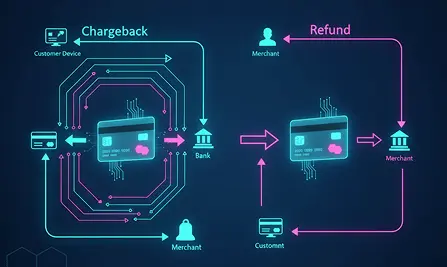
Recurring card payments on debit: guide to setup and benefits Buyers often don’t see the difference between chargeback and refund. They use both mechanisms to refund money on a completed purchase. But for businesses, these concepts are very different, both in terms of return mechanics and legal aspects, including the impact on reputation and attitude on the part of providers. Understanding the chargeback and refund difference will allow entrepreneurs to effectively manage risks, improve customer service, and protect their financial stability. Payment reversal and refund: are they the same thing? Despite having a similar end goal – returning money to the customer – the mechanisms differ fundamentally in terms of who initiates them, the procedure involved, and the consequences. The table below shows the main differences between chargebacks and refunds. Criterion Refund Chargeback Initiator Seller (independently or at the buyer’s request) by agreement from the merchant Buyer (via bank or payment system) Mechanism Voluntary transfer of funds back to the customer’s card Enforced collection of funds via card-issuing bank Deadlines Usually 3–14 days Up to 180 days depending on the payment system and dispute circumstances Commissions No high commissions for the seller High commission ($15–$100+) plus possible penalties Need for bank involvement The acquiring bank is not involved Mandatory involvement of the customer’s card-issuing bank Reason for refund The seller’s internal policy is sufficient Requires proof of transaction illegality (documents, screenshots, call records, etc.) Impact on seller’s reputation Neutral Negative (increase in chargeback rate, risk of account blocking) Possibility of dispute No Possible How does a refund work? A refund is a voluntary return of money by the seller to the customer’s card. This operation takes place as follows: Customer request. The buyer requests a refund from the seller. Reasons may include defective goods, cancelled orders, discrepancies with the stated description, and other circumstances. Seller verification. The company reviews the refund request in accordance with its own refund policy. Sending a request. The seller sends instructions to the payment system or bank regarding the amount and reason for the refund. Refund. The client receives the money back, while the seller sets acceptable deadlines himself. This is usually 3-14 days. The main advantages of refunds for businesses are control over the return process, no penalties or fees, preservation of the company’s positive image, and direct contact with the customer, which helps to strengthen trust. How does a chargeback work? A chargeback is a much more complex procedure initiated by the customer themselves through the card-issuing bank. The mechanism includes the following stages: Customer application. The cardholder contacts their bank with a complaint. For example, in the event of fraud, non-delivery of goods, double debiting, etc. The bank initiates the process. The issuing bank launches the chargeback procedure, debiting the specified amount from the merchant’s account. Seller notification. The payment system notifies the merchant of the dispute. Representment. The seller has the right to present evidence of the legality of the transaction. For example, confirmation of delivery, customer consent, etc. Bank assessment. If the evidence is convincing, the amount is returned to the seller; otherwise, it remains with the customer. The main consequences of chargebacks for businesses are commissions and penalties for the seller, a deterioration in the chargeback rate rating (exceeding the threshold threatens the loss of bank acquiring), the need to collect and provide extensive documentation, and the loss of time and resources to resolve conflicts. Why do buyers choose chargeback instead of refund? Buyers sometimes deliberately resort to chargeback, despite the existence of a simple refund mechanism. Here are the main reasons for this behaviour: Distrust of the seller. If the store ignores requests or deliberately delays the consideration of returns. Lack of transparency in the return policy. Confusing application forms, long processing times, unclear requirements. Lack of communication with the store. Situations where it is impossible to contact the seller – store closure, fraudulent schemes. Desire to speed up the process. Some believe that the bank will handle it faster than the seller. Insufficient understanding of the difference. Many buyers do not know that a chargeback is a last resort, not an alternative to a regular return. It is important to note that sometimes the buyer can receive double reimbursement. For example, they first requested a refund and then initiated a chargeback. This is possible if the buyer decides that the seller has ignored the request. In practice, the funds are not received immediately, but with a delay of 3-14 days. If it happens that I got a chargeback and a refund, then one of the refunds may be disputed by the seller and debited from the customer’s card. Psychological aspects of choosing a chargeback It is important to note that the choice of a chargeback instead of a refund is often due not only to objective reasons, but also to psychological factors: Fear of losing money: the customer fears that the seller will refuse to voluntarily return the funds. Perception of fairness: contacting the bank is perceived as a fairer and more effective way to restore rights. Social approval: there is a widespread belief that chargeback is a simple and quick way to resolve a conflict. These points should be taken into account when developing a customer communication strategy. How can businesses minimise the risks of chargebacks and return issues? Effective risk management requires a comprehensive approach that includes the following steps. Simplify the return process Clearly state the return policy on your website. Provide users with a simple automated application form. Process returns quickly – within 3–5 business days. Improve communication with customers Respond to requests immediately. Provide customers with complete information about the status of their orders. Organise convenient customer support for urgent requests. Document every transaction Keep proof of delivery of goods. Keep records of telephone conversations and correspondence. Record electronic confirmations of customer consent. Work with customers Explain the difference between a refund and a chargeback. Recommend that they first request a regular return. Monitor chargeback metrics Constantly monitor the chargeback rate.

- Reading time: Reading time: 11 min. min.
Recurring card payments on debit: guide to setup and benefits
In today’s digital world, subscriptions are becoming an integral part of everyday life. According to recent research, the number of BNPL users will reach 91.5 million in 2025, and the annual increase in the total volume of regular payments is estimated at 9%. Recurring card payments, which are automated debits of funds according to a set schedule, are becoming increasingly important. Let’s take a closer look at how these payments work, what benefits they bring to businesses and customers, and how to organise their implementation effectively. What are recurring debit card payments? Recurring payments on debit card is the automatic debit of a certain amount at a predetermined time. This model is used in e-commerce, online services, online schools, and businesses where payment for subscriptions or other services is provided.Using regular payments frees customers from having to fill out a form for debiting money every time. It is enough to indicate your details once, familiarize yourself with the schedule and agree to periodic write-off. Using this model, a business can plan a budget and ensure a stable cash flow. How does it work in practice? The recurring payment process consists of a few simple steps: Customer authorisation. The user agrees to repeat charges once, for example, when registering on the platform or purchasing a subscription. Payment token storage. Instead of storing card numbers, tokenisation is used – replacing real data with a unique encrypted identifier that complies with PCI DSS requirements. Automatic debit. On the selected date, the system initiates the payment itself, debiting the required amount from the customer’s card. Funds crediting. The money is credited to the company’s account, and the client receives a notification of the transaction. Regular payment parameters The main parameters that determine the regular payment scheme: Frequency: monthly, weekly, quarterly or annually. Payment amount: fixed or dependent on the volume of services provided. Duration: indefinite (until cancelled) or limited in time. Notifications: automatic alerts to the customer about upcoming debits. Where are recurring payments used? Recurring payments are most common in the following areas: Online services (streaming, cloud storage, subscription software). Telecommunications (internet, television, mobile operators). Educational platforms (online courses, webinars). Fitness clubs and sports apps. Charitable donations. E-commerce (subscription boxes, cosmetics, food). Differences from direct debit There is often confusion between recurring payments from a card and direct debit. Below are the key differences. Criterion Regular payments from a card Direct debit Initiator Company (based on a saved token) Customer’s bank (under a signed mandate) Enrolment period 1–3 working days Up to 5 working days Customer management Via the service interface or bank Only through revocation of the mandate Commission Percentage of the amount, usually 1.5–3.5% Fixed rate + commission Flexibility Easy to change Requires mandate renewal Risk of chargebacks High Low Recurring card payments are ideal for digital products with international users, while direct debit is preferable for local markets with fixed tariffs. Who will be using the subscription model in 2025 Key industries and dynamics: SaaS and cloud services. In 2025, the market is estimated at $578 million. Media and entertainment. Streaming platforms are growing by 18% annually, with 60% of users having 2+ content subscriptions. E-commerce. Subscriptions for essential goods (cosmetics, food) – 35% growth, automation of repeat orders through recurring payments. Fintech. Regular investments and savings – 50% customer growth, micro-subscriptions for financial advice and portfolio analysis. Education. Online courses with monthly payments – 28% growth. Corporate subscriptions for staff training. Health and wellness. Fitness apps and telemedicine – 40% growth, subscription boxes with dietary supplements and vitamins. This growth is driven by the benefits that businesses gain from using the subscription model and implementing regular card payments. Accounting automation Reduction in accounting workload by up to 40%. Reduction in operating costs. Integration with CRM and ERP systems. Stable financial flow 85-90% accuracy in revenue forecasting. 60% reduction in cash gaps. Access to financial instruments for future payments. Business scalability Work with more than 70 currencies. Support for over 100 payment methods. Compliance with international standards (GDPR, PSD2, CCPA). Reduced customer churn Increased customer loyalty (70% stay longer than six months). Personalised notifications and promotions. Audience analytics and segmentation In-depth analysis of consumer behaviour. Testing of various pricing models (A/B testing). Creation of individual tariff plans (‘family’, student and other options). Security and legal transparency Automatic receipts and confirmations. Transaction history for dispute resolution. Compliance with tax obligations. Do you have any more questions? Fill out the form and we will contact you *By submitting this application, you consent to the processing of your personal data in accordance with the privacy policy. Recurring payments vs Direct debit Recurring payments and direct debit are two ways to automate periodic debits, but they have fundamental differences.Direct debit assumes that the recipient initiates repayment from the payer’s account based on a pre-issued order. The payer sets only general conditions, the amount and date of the debit may vary.Periodic payments are pre–programmed repayments for a fixed amount, which the payer sets independently.Advantages of regular pay: Full control of the payer: you set the amount, date and frequency of payment yourself. Transparency: there is no risk of unexpected write–offs – everything is strictly on schedule. Flexibility: it is easy to change or cancel a payment at any time. Security: you do not need to provide access to the account to third parties. Versatility: they work with cards and electronic wallets, do not require a bank mandate. Recurring payments provide more control and predictability, reducing risks for the payer. How to set up recurring payments: step-by-step instructions To successfully implement recurring payments, follow these simple recommendations Step 1. Select a payment provider Evaluate providers based on the following criteria: Support for the necessary currencies and payment methods. Commission rates and terms of cooperation. Availability of a high-quality API for integration. Step 2. Organise card tokenisation Store only tokens, not actual card numbers. Use modern data encryption. Update security certificates in a timely manner. Step 3. Determining the payment schedule Set an appropriate payment frequency.
- Reading time: Reading time: 7 min. min.
SEPA instant payments: understanding SCT inst and EPC schemes
In the era of digital transformation, speed and convenience of payments are becoming competitive advantages. SEPA is a revolutionary step in the evolution of European systems, enabling real-time transfers.Since its launch in 2017, the system has been rapidly gaining momentum: according to EPC data, more than 529 million people live in the SEPA zone, making 52-60 billion electronic payments annually. In this article, we will look at how instant transfers work in the eurozone, what SCT Inst is, and the role of the EPC in the development of instant transactions. What is SEPA SEPA (Single Euro Payments Area) is a single euro payments area comprising 27 EU + 3 EEA + 8 non-EEA countries. In 2025 Serbia in negotiation process in the zone, and in 2024, Montenegro and Albania joined SEPA. The goal of the single zone is to standardise and simplify non-cash transactions in euros.Key features of SEPA: Uniform rules for all participants. Standardised instruction formats. Reduction of cross-border transfer costs to the level of domestic transfers. Support for various types: credit transfers (SCT), direct debits (SDD), cards (SCD). SEPA has laid the foundation for innovation, including SEPA Instant Payments. What is EPC EPC (European Payments Council) is the governing body of the European payments industry, responsible for developing common rules and standards for SEPA.EPC functions: Coordination of the interests of banks, fintech companies and regulators. Developing payment schemes (e.g. SCT Inst). Ensuring the compatibility of payment systems within the SEPA zone. Promoting innovation (including EPC Instant Payments). The EPC acts as a ‘platform architect’, ensuring that all SEPA participants operate according to the same rules. What is the SCT Inst scheme? SCT Inst (SEPA Credit Transfer Instant) is an instant payment scheme within SEPA that allows funds to be transferred between accounts 24/7/365 in seconds.Here’s how SCT Inst works. The sender initiates the transaction via online banking or a mobile app. The system checks the availability of funds and compliance with the rules. The funds are instantly credited to the recipient’s account. Both parties receive confirmation in real time.The average processing time is no more than 10 seconds. The platform is available 24/7. Only one currency is used to receive funds – the euro. SCT Instant Payment is not just about speed, but a new standard of convenience for businesses and individuals. Key features of the SEPA instant payments 2025 rules In 2025, EPC instant payments updated the SCT Inst scheme rules, enhancing security and scalability. Key changes: Enhanced authentication. Improved identification. The process of revoking SEPA Credit Transfers (SCT) and SEPA Instant Credit Transfers (SCT Inst) is being tightened — only one revocation will be allowed for each transaction. Extended limits. The current limit has been increased from €100,000 to €1 billion, while providers can set their own limits on the upper amount. Integration with Open Banking. API support for seamless interaction with fintech services and PISPs. Fraud protection. Implementation of machine learning algorithms to detect suspicious transactions in real time. The <10 seconds rule is introduced. There should be a response regarding the SCT Inst operation by 5 seconds. If no response is received within 7 seconds, a negative decision is made. The latest when the PSP initiator can receive a response regarding the Inst SCT operation is 9 seconds. These rules are designed to ensure that SCT Instant Payment remains a reliable and scalable solution for the whole of Europe. Benefits and use cases of instant payments SEPA open up new opportunities for all market participants.Individuals receive instant transfers to friends and family without weekends, pay for services (utilities, internet) on the day of application, and make emergency transfers, for example, in case of accidents or illnesses. Businesses gain access to faster capital turnover, reduced cash gaps, instant payments to suppliers and employees, and improved customer experience, such as refunds for cancelled orders.Industry case studies: E-commerce. Instant refunds for cancelled orders. Logistics. Real-time payment for drivers’ services. Freelancing. Payments to contractors immediately after project completion. Insurance. Emergency payments for insured events. EPC Instant Payments also stimulate the development of innovative services – P2P transfers via messengers, automated transactions via smart contracts, integration with IoT devices, such as paying for parking via an on-board computer. Do you have any more questions? Fill out the form and we will contact you *By submitting this application, you consent to the processing of your personal data in accordance with the privacy policy. Want to implement SEPA in your business? The BillBlend payment gateway operates legally in the EU and is fully SEPA compliant. With it, you can: accept SCT Instant Payments in seconds; ensure round-the-clock payment processing; integrate instant transfers into your existing system; comply with all regulatory standards (PSD2, GDPR, PCI DSS) . Get a free consultation from BillBlend experts to learn how to connect SEPA Instant Payments to your website or app, choose a pricing plan tailored to your business, set up API integration without technical difficulties, and launch instant payments in no time. Don’t miss the chance to take your business to a new level of speed and convenience for your customers. Challenges of SEPA Instant Payments in 2025 Despite the progress in adopting SEPA, European banks face several persistent challenges in 2025: High implementation costs. Upgrading legacy systems to support real‑time processing demands substantial investment in technology and infrastructure. Operational complexity. Integrating instant payments with existing workflows requires reengineering processes and training staff, leading to operational disruptions. Fraud and security risks. Instant transactions leave less time for fraud detection, increasing vulnerability to scams and cyberattacks. Regulatory compliance. Keeping up with evolving EU regulations (e.g., PSD3) and cross‑border requirements creates administrative burdens. Profitability concerns. Thin margins on instant payments, combined with mandatory fee caps, strain revenue models, especially for smaller banks. These hurdles require strategic planning and collaboration across the financial ecosystem to ensure sustainable growth of instant payment services. Conclusion SEPA Instant Payments is not just a technology, but a new paradigm for Europe’s payment infrastructure. The SCT Inst scheme, supported by the EPC,

- Reading time: Reading time: 6 min. min.
Online payment methods in Bali
Indonesia is a country of islands. Bali is considered one of the main islands. It is a tourist and economic center of the country. For business, Bali is interesting due to the large number of tourists and the high purchasing power of the local residents. If you plan to open a business in Indonesia and accept transfers from the residents of Bali, it is important to know the preferences of the local residents. This is the topic of our article. In this article, you will learn about the popular payment methods in Bali. Indonesia’s overall economy Indonesia is one of the leaders in the Asian region in terms of economic development and e-commerce. The country’s population has exceeded the 284 million mark, so it is a big market. By the end of 2024, the volume of e-commerce amounted to $354.6 billion. In 2025, the increase was 7%, and in the next 8 years, the growth is estimated at 9% annually. According to experts, the market volume will reach $760.8 billion in 2033. In Indonesia, as well as other Asian countries, the share of mobile transactions is actively growing. In 2025, about 67% of all purchases were made on mobile devices. This trend will continue in the coming years, so it is important for businesses to introduce alternative payment methods.In Indonesia, as in other countries of the world, the popularity of “buy now, pay later” (BNPL) models, QR codes and electronic wallets is growing. These technologies create a unique dynamic in the market, especially given the development of the QRIS standard, which accelerates the process of adapting new technologies to payments. Online payment methods in Bali Let’s take a look at Bali payment methods. Bank Cards Bank cards (Visa and MasterCard) continue to play a key role in international payments in Bali. However, their popularity is gradually decreasing — they are increasingly inferior to digital wallets in terms of accessibility and convenience.The reason is simple: the banking infrastructure on the island is unevenly developed — in many cities there are no bank branches. At the same time, the vast majority of residents have smartphones, which makes mobile payment solutions a more practical option.For companies whose target audience is tourists and foreign customers, accepting international cards remains a mandatory requirement. This payment method provides: a high level of transaction security; the usual convenience of calculations for foreign guests. This is why bank cards continue to be an important tool for business in Bali, despite the growing competition from digital alternatives. QR code payments Contactless payment via QR codes is actively developing in Indonesia. The basis of this system is the unified standard QRIS (Quick Response Code Indonesian Standard), or “quick response code”. The introduction of a common format has simplified the implementation of QR payments: now they are accepted both online (on websites and in applications) and offline (in shops and cafes).How it works: QRIS (code scanning). The user opens the payment application, scans the QR code at the checkout or on the screen, confirms the amount, and the transaction is completed. QRIS Tap (touch the terminal). In March 2025, Indonesia launched this improved version: it is enough to bring a smartphone to a terminal marked with a QRIS Tap — payment will be made instantly, without having to open the application and scan the code. QR payments are especially in demand among young people: almost everyone has a smartphone, and the payment process takes a few seconds. This is also beneficial for businesses: ease of implementation — no expensive equipment is required.; reduced dependence on cash — less risks and collection costs; service speed — queues at the checkout are reduced. What to choose: QRIS or QRIS Tap? Both methods are actively used in Bali and Indonesia, but each has its own nuances. QRIS is suitable if: do you have a small shop or cafe with a low flow of customers; it is important to save on equipment (it is enough to print a QR code). QR Tap is optimal if: you aim for maximum service speed (for example, in supermarkets or coffee shops); you want to emphasize the technological nature of your business and attract a young audience. As a result, the choice depends on the format of your business and the expectations of customers: QRIS stands for reliability and accessibility, while QRIS Tap stands for speed and modern user experience. ‘Buy Now, Pay Later’ (BNPL) The BNPL (Buy Now, Pay Later) model is gaining momentum in Bali — it allows customers to split payments into convenient parts. This format is especially in demand among young people: it meets the demands for flexibility and accessibility, eliminating the need to immediately shell out a large sum.Where it works. First of all, on e—commerce platforms. They are increasingly used in offline stores, which are trying to attract more customers.Why BNPL is beneficial to business: it stimulates the growth of the average receipt: customers are more willing to make purchases, knowing that they can pay in installments; increases conversion: some operators offer a delay in the first payment, which makes the purchase even more affordable. For consumers, BNPL is an easy way to manage their budget, and for sellers, it is an effective tool to increase sales. Do you have any more questions? Fill out the form and we will contact you *By submitting this application, you consent to the processing of your personal data in accordance with the privacy policy. E-wallets In Bali, e-wallets are confidently leading among payment methods. GoPay and OVO are the most popular — they have the widest user base.What you can do with them is to pay for goods and services, transfer money between users, and make purchases both online and in physical stores.Key advantages for users: Convenience: everything is controlled via smartphone; Bonuses and discounts: Apps often offer promotions and cashback, increasing customer loyalty; Versatility: one tool works both online and offline. For businesses, e—wallets provide access to a wide audience (most locals actively use
- Reading time: Reading time: 6 min. min.
Online payment methods in Portugal
Portugal is rapidly moving towards new financial realities, transforming itself into a country where digital payments have become an integral part of everyday life. Here, at the crossroads of tradition and innovation, unique approaches to paying for goods and services are emerging. Let’s dive into the fascinating world of payment methods in Portugal and find out how consumers will pay for their purchases in 2025. Card payments Card payments are widely adopted across Portugal’s payment landscape. Global giants Visa and Mastercard, which are accepted almost everywhere, are the leaders. These brands are associated with reliability and widespread availability, which explains their popularity among locals and tourists. Credit cards are more often used for large purchases, while debit cards are used for small everyday expenses. Banks such as Caixa Geral de Depósitos, Millennium BCP and Novo Banco issue the majority of cards, ensuring a high degree of security and convenience when conducting online transactions. Payments in instalments: BNPL is gaining momentum Buy Now, Pay Later (BNPL) has become a real hit among Portuguese consumers. Young people are particularly fond of such services, which allow them to buy what they want today and pay for it tomorrow in small instalments.The most notable representatives of Portugal payment method: Klarna – an international leader that wins the hearts of shoppers with its deferred payment option. Scalapay – a young but ambitious player offering convenient instalments in three equal payments. PayPal’s Pay in 4 – a familiar name with a new feature that splits payments into four equal parts. CTT Now! and Cetelem – local solutions that integrate directly into retail chains and banking ecosystems. These services make shopping accessible and convenient, reducing the psychological barrier to large expenditures. Bank transfer – Multibanco Portuguese people like to control their finances, and nothing gives them more control than a direct bank transfer. Multibanco is a national system, a symbol of stability and confidence in the future. The purchase procedure is quite simple: The consumer selects Multibanco when placing an order. They receive a unique transaction number. They make the payment via internet banking, mobile banking or the nearest ATM. Multibanco has gained widespread adoption due to its high processing speed and transparent operations. The complementary service MB WAY extends this functionality by enabling instant peer‑to‑peer transfers via mobile devices SEPA Instant The European instant payment system SEPA Instant Credit Transfer (SCT Inst) has become a bridge between Portugal and the rest of Europe. It allows cross-border transactions to be carried out instantly, opening up new horizons for business and tourism.This service is particularly attractive for those who do business outside the country, providing seamless integration into the single European economy. Do you have any more questions? Fill out the form and we will contact you *By submitting this application, you consent to the processing of your personal data in accordance with the privacy policy. Digital wallets Smartphones have become veritable financial centres, and Portugal is no exception. The most common digital wallets are: MB WAY — the undisputed champion with a market share of around 45%. More than 4.5 million active users confirm its success. Integration with 28 banks makes it an indispensable tool for online shopping and P2P transfers. Apple Pay and Google Pay — convenient solutions for smartphone owners, allowing them to store cards and make purchases with a single touch. PayPal — a universal solution that works both in Portugal and far beyond its borders. Moey — is a new product from Crédito Agrícola, aimed at a young audience eager for simple and fast solutions. These are some of the most popular Portuguese payment methods, especially in e-commerce, as well as gambling and sports betting. Cash & Payshop: the legacy of the past Despite rapid digitalisation, Portugal cherishes the memory of paper banknotes. Some shoppers continue to prefer cash payments, especially older citizens or those who are distrustful of digital technologies.This is where Payshop comes in – a unique system that allows you to pay for your online order at your nearest shop or post office. The process is simple: the customer receives a unique code, takes it to the service point and pays in cash. This scheme combines the advantages of the digital world with the warmth of human contact. Why it is important for businesses to understand the structure of customer preferences Imagine this situation: you have spent months developing your dream product, put your heart and soul into a marketing campaign, and then… silence. Visitors come to the website, add items to their basket and disappear. Sound familiar? Most likely, you’ve overlooked a key detail – the structure of your customers’ preferences. Portugal, like any country with a unique culture, has its own consumption characteristics. Here, despite the general trend towards cashless payments, there is still a commitment to traditional payment methods. Some customers prefer to use credit cards, others prefer debit cards, and still others choose digital wallets or even instalment plans (BNPL). Some are used to seeing familiar international brand logos, while others are looking for local solutions.Understanding these nuances allows you to create a truly user-friendly payment interface that attracts customers rather than repels them. Research shows that simply expanding the list of available payment methods can reduce the number of abandoned shopping carts by 15-20%.In addition, knowing the preferences of your target audience allows you to build an effective communication strategy tailored to specific segments. For example, young people have a positive perception of mobile payments and BNPL solutions, while the older generation often prefers traditional bank transfers or cash.Finally, a deep dive into the structure of preferences helps to identify customer pain points and eliminate them in a timely manner. Perhaps the reason for leaving was an inconveniently located payment button or an unclear interface. By removing such obstacles, you increase loyalty and strengthen your brand’s reputation. Factors that will increase your appeal to customers So, you understand the importance of studying preferences. Now the next question arises: how to apply this knowledge in
- Reading time: Reading time: 5 min. min.
Online payment methods in Indonesia
Businesses are increasingly paying attention to the Indonesian market. The country ranks first in Southeast Asia in terms of GDP. The country is actively developing, it has a lot of solvent population. Those entrepreneurs who consider the region for the development of their business must know what the locals prefer to pay. In the review, we will look at the most popular payment method in Indonesia, why the structure of the systems in demand differs from the European or African ones. Features of Indonesia’s payment infrastructure In Southeast Asia, Indonesia ranks first in terms of GDP. In 2025, the country’s population is expected to reach 293 million people. The average age is 31 years. There is a large proportion of young people in Indonesia who choose modern payment methods. These include cryptocurrencies and digital wallets. Despite this, the share of bank cards remains significant, especially among the more adult population. Features of Indonesia payment method in and general market overview: In 2024, Indonesia’s e-commerce market In 2024, Indonesia’s e-commerce market totaled $354.6 billion. Over the past five years, the market has been growing and its growth is expected in the next 5 years.. Over the past five years, the market has been growing and its growth is expected in the next 5 years. The market is projected to grow to 760.8 billion dollars by 2033. The average annual growth is projected at 9.07%. 67% of all e-commerce payments are made on mobile devices. This is a global trend that confirms consumers’ switch to smartphones and mobile commerce. There has been rapid growth in the popularity of ‘buy now, pay later’ (BNPL) models, QR codes and e-wallets, creating unique dynamics in the market. The development of QRIS (a standardised QR code format) looks particularly promising, as it accelerates the process of adapting new technologies for making payments. It is worth noting that a significant portion of transactions are conducted using cashless and contactless technologies, such as e-wallets, reflecting the high level of digitalisation in Indonesia payment system. Overview of popular payment methods Let’s take a look at the top payment methods in Indonesia. Digital wallets These universal applications account for approximately 35% of all e-commerce payments. Examples include GoPay, OVO, DANA, LinkAja, and ShopeePay. Each serves different user groups, providing a seamless transition between offline and online environments. Integrating multiple digital wallets increases brand awareness and lowers barriers to completing purchases. Virtual bank transfers Banking systems account for another 26% of e-commerce transactions. Virtual accounts simplify the movement of funds by generating unique identifiers for each transaction, which simplifies the reconciliation process. Offering virtual banking services demonstrates reliability and aligns with existing consumer behaviour patterns. BNPL (Buy Now, Pay Later) services Indonesia payment methods are keeping pace with the global trend, which sees a gradual increase in the popularity of services that allow customers to pay in instalments and collect their goods immediately. This method accounts for around 9% of current e-commerce volumes. Providers such as Akulaku, Kredivo, and Tokopedia’s ‘Pay Later’ option are particularly attractive to millennials and Gen Zers who value flexibility without compromising on immediate gratification. The inclusion of BNPL significantly increases the average cheque. QRIS transactions Standardised QR codes provide unified access to various payment networks. Since its introduction, QRIS has been actively adopted by local businesses. This payment method accounts for about half of all transactions at small and medium-sized businesses. The implementation of QRIS increases inclusivity and operational efficiency. Traditional bank cards Credit and debit cards remain popular among Indonesian payment methods. They account for approximately 13% of all transactions. Despite lower usage rates, support for Visa, MasterCard, and Gerbang Pembayaran Nasional (GPN)-related instruments ensures broad accessibility for international audiences. Do you have any more questions? Fill out the form and we will contact you *By submitting this application, you consent to the processing of your personal data in accordance with the privacy policy. Direct debits via mobile apps Services offered by OneKlik (BCA) and OCTO Cash (CIMB Niaga) are examples of instant and seamless withdrawal transactions. Ideal for subscription models or recurring payments, direct debits minimise the administrative costs associated with manual collection. Why it is important to consider local user preferences Knowledge of the local market and Indonesia online payment methods significantly increases the chances of success for any project. That is why understanding the Indonesian payment landscape is crucial: Increased conversion rates. By providing users with convenient payment options, the risk of purchase abandonment is reduced. Strengthening trust. Demonstrating an understanding of the buyer’s needs helps to build loyalty and increase repeat orders. Expanding your target audience. The more payment options you offer, the wider your potential customer base. One of the tools that helps simplify integration with Indonesian payment method is the Billblend service. This provider supports over 100 types of payment methods, including digital wallets, QRIS, and many other popular methods in Indonesia. The key advantages of the service are: Free integration; Easy connection via API; Support for over 70 currencies, including cryptocurrencies and the Indonesian national currency (rupiah); Minimisation of fraud and error risks when processing payments. Using a universal payment platform makes it much easier to adapt your business to local conditions and increases your chances of successful development in the Indonesian market. Conclusion To achieve success in a new market, it is critical to consider the characteristics and preferences of local users. The use of specialised payment instruments will allow you to adapt to the needs of the region and provide a comfortable shopping experience for your customers. The right integration strategy will have a tangible effect on your business’s key metrics, opening up access to a new, highly profitable market segment. Frequently asked questions Which e-wallets are most common in Indonesia? The main players are GoPay, OVO, DANA, LinkAja, and ShopeePay. What percentage of online payments are made via bank transfers? The standardisation of QR codes has greatly facilitated interaction between sellers and buyers, reducing operating costs and increasing transaction transparency. What is the role
- Reading time: Reading time: 13 min. min.
Blockchain for Cross-Border payments
We are accustomed to fast domestic transfers. A delay of several minutes in crediting funds can cause discomfort. For businesses, transaction processing speed is also very important. Having trading accounts with instant crediting or daily transfers significantly facilitates work and allows profits to be used more quickly to boost the company’s turnover. But what should companies operating in the international market do? They have to make transfers to other countries to pay for supplies or production. Traditional bank transfers can take 3-5 days, which can lead to disruptions in the companies’ operations. Crypto cross-border payments can solve this problem. With their help, businesses can transfer payments to most countries in the world in a matter of minutes.The growth in popularity and demand for blockchain international payments is reflected in the statistics on the use of stablecoins. Over the past 5 years, their supply has grown from $5 billion to $305 billion. According to VISA, over the past 12 months, the total volume of retail transactions in stablecoins exceeded $61,4 billion.In this article, we will explain how cross-border crypto payments work, how they are better than traditional banking services, and what advantages businesses gain from transfers in USDT and other cryptocurrencies. What is blockchain Crypto cross-border payments are based on blockchain technology.Blockchain is a distributed database consisting of sequentially connected blocks containing records of completed transactions. This database is supported by a network of nodes (computers), each of which stores a copy of the ledger. The most important characteristics of blockchain are: Distributed – the absence of a single control centre reduces vulnerabilities and increases system stability. Immunity to change – data that has been entered cannot be changed or deleted without being noticed, as changes require the consent of the majority of network participants. Cryptographic protection – each change in the ledger is accompanied by a unique encrypted key that is only accessible to certain participants. Transparency – all participants can see the transaction history, which helps to increase trust in the system. Thanks to these properties, blockchain has become the foundation for a whole range of new financial products and solutions. Comparison of digital assets: cryptocurrencies, stablecoins and CBDCs Let’s take a closer look at the key differences and areas of application for each type of digital asset. Cryptocurrencies (Bitcoin, Ethereum, etc.) Decentralised digital assets that have no physical embodiment and are not backed by any government institution.Features: Completely autonomous and controlled by network algorithms. The exchange rate is determined solely by market mechanisms of supply and demand. High degree of confidentiality and anonymity. Applications: Peer-to-peer (P2P) transfers without intermediaries. Cross-border payments with minimal commission. A means of preserving capital in conditions of unstable national currency. Stablecoins (USDC, USDT, etc.) Digital assets whose value is rigidly pegged to traditional (‘fiat’) currency, most often to the US dollar or euro.Advantages: Resistance to sharp exchange rate fluctuations inherent in conventional cryptocurrencies. Transparency and predictability of value. Purpose: International transfers with minimal risk of losses due to exchange rate fluctuations. Financial transactions in emerging markets with unstable economic conditions. A tool for fast transfers between users and companies. Central Bank Digital Currencies (CBDCs) State-regulated digital equivalents of national currencies, created and managed by central banks.Characteristics: Centralised management and control by state authorities. Enhanced security and regulation of transactions. Practical use: Domestic and international settlements between banks. Retail payments by the population as part of pilot programmes (e.g. the Chinese digital yuan). Expanding financial accessibility and inclusiveness through government initiatives. Each type of digital asset is unique and designed to solve its own set of problems. Cryptocurrencies are suitable for maximum freedom and independence, stablecoins are suitable for stability and reliability, and CBDCs are suitable for integration with traditional financial systems under state control.When considering blockchain for international payments, there is greater demand for stablecoins, while cryptocurrencies are used less frequently. While CBDC adoption remains relatively low, it is important to note that CBDC designs vary. Some proposals incorporate elements of transparency and limited decentralisation, though they inherently involve central bank oversight — a key distinction from cryptocurrencies that prioritise decentralised governance and autonomy from state control.. How blockchain works in cross-border transfers: ensuring the security and efficiency of international payments Traditional cross-border payments often involve many difficulties: long waiting times, high fees, and the need to involve numerous intermediaries, such as correspondent banks. This is where blockchain technology for cross-border payments comes in, radically changing the established standards of international financial transactions. How blockchain works in cross-border payments Blockchain is a distributed ledger consisting of a sequence of interconnected blocks, each containing information about a transaction. Here’s how it works in the context of international transfers: Direct connection between participants. The sender and recipient interact directly, bypassing intermediaries, which reduces time and commission costs. Recording and confirming transactions. Each transaction is recorded in the blockchain and verified by a network of nodes (validators) that have reached a consensus on the authenticity of the transaction. Immediate fulfilment of obligations. Once confirmed, the transaction is considered complete, and the funds are instantly transferred to the recipient, regardless of the geographical location of the parties. Increased transparency and reduced risks. All participants have equal access to the transaction history, which eliminates the possibility of falsifying records and minimises the likelihood of fraud. Stablecoins, digital assets whose value is pegged to traditional currencies (most often the US dollar), have become particularly important in international settlements. Coins such as USDT and USDC solve the problem of volatility of conventional cryptocurrencies while retaining the advantages of blockchain: Exchange rate stability. By pegging themselves to fiat currencies, stablecoins maintain stable values, which is convenient for commercial and personal transfers. Ease of withdrawal. Recipients can easily withdraw funds through P2P platforms or cryptocurrency exchanges, receiving the equivalent in local currencies. Versatility. Stablecoins are widely used and accepted by most exchanges and services, making them an attractive option for international payments. How blockchain works in cross-border payments The use of blockchain and cryptocurrencies in cross-border transfers has both strengths and
- Reading time: Reading time: 10 min. min.
Same day settlement payment gateway
We are used to receiving money immediately after a transfer and goods after payment at the checkout or in an online store. Modern businesses with a high level of competition need no less efficiency. Funds received from customers can be used to pay bills, deliver new goods or used in other ways.Many providers offer businesses the option of opening current accounts with a 2-5 day delay in receiving money. In this case, the company does not receive payments from customers immediately, but after a certain period of time. In order not to waste precious time, businesses need a same day settlement payment gateway. What is a current account and how does payment work? A settlement account is a bank account designed specifically for legal entities and individual entrepreneurs. Its main purpose is to conduct non-cash transactions related to business activities: accepting payments from buyers, settling accounts with counterparties, paying salaries to employees, and other financial transactions. The payment process consists of several stages: The buyer selects a product or service and initiates payment. The buyer’s card details are sent via a payment gateway to the issuing bank to verify that there are sufficient funds. The bank confirms the availability of funds and approves the transaction. The funds are debited from the buyer’s account and transferred to the seller’s account. The clearing process takes place — the reconciliation and confirmation of mutual settlements between banks. The final stage is the receipt of funds in the seller’s current account. Traditionally, this process took several business days, creating significant delays in the receipt of revenue by businesses. The exact timing depends on the working conditions of the organization itself and the banking sector of the country as a whole.With the advent of instant settlement payment gateways, the situation has changed and now entrepreneurs can receive funds immediately. What are the formats for transfers to a current account? There are three main formats for transferring funds to a current account: Instant transfers: funds are credited to the account almost instantly, within a few seconds or minutes. One-day transfers: payments are made within one business day, most often towards the end of the business day. Deferred transfers: the standard practice of most banks, where funds are credited 1-5 business days after the purchase is made. Each of these options has its pros and cons, depending on the needs of a particular business. How instant payment gateways work Instant payment gateways allow sellers to receive money from buyers almost instantly, bypassing the long waiting periods of standard banking procedures. There are two main models for such gateways: On-Demand Settlements: allows you to manually initiate fund transfers at any convenient time, providing maximum flexibility in cash flow management. Same-Day Settlements: automatic transfer of funds at a fixed time during the day (usually in the morning and evening), ensuring regularity and predictability of funds receipt. Such services operate around the clock, including weekends and holidays, ensuring the continuity of the enterprise’s financial cycle. Do you have any more questions? Fill out the form and we will contact you *By submitting this application, you consent to the processing of your personal data in accordance with the privacy policy. Benefits for business Using a same-day settlement payment gateway opens up a range of opportunities for businesses of all sizes: Optimisation of working capital management. Immediate access to earned funds allows you to quickly cover expenses, pay salaries and purchase new batches of goods. Increased financial stability. The absence of delays reduces the need for short-term lending and improves the company’s financial stability. Competitive advantages. Fast payment processing increases customer loyalty and strengthens brand reputation. Effective response to market opportunities. The ability to immediately invest profits in business development or marketing campaigns. Minimisation of default risk. Timely receipt of funds minimises the risk of cash flow gaps and overdue obligations to partners. The use of such solutions becomes particularly relevant during periods of increased business activity, such as during sales or holiday seasons, when the speed of capital turnover is critical to the success of all commercial activities. What to consider when choosing a provider Choosing the right payment gateway provider is an important step that will affect the future operations of your company.Here are the key factors to consider: Reliability and security. Ensure that the selected provider complies with international security standards (PCI DSS) and has a reliable fraud prevention system. Cost of services. Analyse transaction processing fees, withdrawal fees, and possible hidden charges. Supported payment methods. Check the availability of popular local and international payment methods that your customers use. Integration with existing systems. Easy connection to your website or CRM will greatly facilitate the transition to a new system. Quality of customer support. Round-the-clock assistance and quick resolution of emerging issues play a key role in the smooth operation of your business. Additional services. Some providers offer advanced analytics, reporting, and automation of payments to employees and contractors. The right choice will ensure a comfortable interaction with the financial service and increase the efficiency of your business processes. Why BillBlend is the best solution for your business Among the many offers on the market, the BillBlend platform stands out with a number of unique features that set it apart from its competitors: Wide coverage of global payment methods. Integration of more than 50 popular payment methods worldwide, including bank transfers, e-wallets, mobile apps, and cryptocurrencies. High level of security. Compliance with PCI DSS standards and working with trusted international partners ensure reliable protection of customer personal data. Ease of integration. A unified API interface simplifies connection to various sales channels and facilitates business scaling. Professional support team. Experienced specialists are available 24/7 to provide assistance, responding promptly to any questions or issues that arise. Low commissions and transparent rates. An optimal pricing policy minimises payment processing costs. Ability to accept payments in high-risk industries. A specialised solution for companies operating in online gambling, cryptocurrency exchanges, and other sensitive areas of business. Thanks to this set of advantages,

- Reading time: Reading time: 9 min. min.
Payment gateway integration for mobile app
Smartphones in the modern world have ceased to play the role of only a means of communication. These are full-fledged gadgets that allow you to communicate with friends on social networks, work, and make purchases. Websites and applications that support online payment for goods are becoming increasingly popular. They are chosen for the opportunity to purchase goods without leaving home, and the built-in transaction acceptance system improves the user experience. In 2025, mobile sales are expected to grow to $2.51 trillion, with an average annual growth rate of 17%. One in five shoppers leaves a website or app when faced with a lengthy checkout process. Thus, having a reliable and convenient payment gateway is becoming a prerequisite for the success of any business operating in the e-commerce sector.Given the latest trends in e-commerce, business owners and mobile app developers are faced with an important question: how to properly organise in-app payments? The answer is simple – mobile app payment gateway integration. Let’s take a look at how to do this and how Billblend can help you. How does paying for goods from a phone work? A payment gateway is a specialized service that acts as an intermediary between the customer and the seller. The service processes the payment data and transmits it to the bank, and receives a response to confirm the purchase or not.They function similarly to EFTPOS terminals, processing information about the buyer and transmitting it to the bank.The schematic principle of operation of a mobile payment gateway is presented below.: the user selects an item and sends it to the shopping cart, after which they proceed to pay for it.; the client enters the bank card data and transmits it to the processor through the gateway.; the information is checked by the bank that issued the card; after verification, the response comes – to approve the transaction or not. This acts as a bridge between the various parties to the transaction: the store itself, the buyer, the acquiring bank, and the customer’s card issuer. Criteria for choosing a payment gateway Modern consumers increasingly prefer to make purchases via smartphones. According to the latest data, the number of mobile purchases users has exceeded 6 billion worldwide. Payment gateway integration in mobile applications allows you to offer customers a convenient payment method, increase sales conversion and strengthen trust in your brand.Below, we will discuss what is important to consider when working with payment gateway integration mobile apps, including for businesses that specialise in high risks. Target audience Make sure that the payment gateway you choose supports the regions where your customers are located. Check the coverage of countries supported by service providers. Billblend is available in Europe, Asia, America, and Africa. The geography is extensive, so you can connect the gateway while in any of these continents. Payment methods Offer your customers a variety of ways to pay, such as bank cards, e-wallets, and mobile platforms (Apple Pay, Google Pay). Research shows that almost half of users prefer to choose from a variety of options. Billblend offers more than 70 options that meet the needs of most customers from all over the world. Commission fees Most payment gateways charge a fixed fee for each transaction plus a small additional amount ($0.30+2.9%). It is important to consider additional account maintenance costs and possible hidden fees. We offer customised terms and conditions tailored to the specifics of your business, such as your field of activity, turnover, and region. Request a free consultation to find out how much it will cost to integrate the Billblend mobile gateway into your application. Do you have any more questions? Fill out the form and we will contact you *By submitting this application, you consent to the processing of your personal data in accordance with the privacy policy. Scalability and customisation Choose solutions that allow you to adapt to business growth and expand the range of services you offer. Make sure that the payment gateway integrates easily with your existing systems and is capable of processing regular transactions. Security and certification Give preference to services that comply with PCI DSS standards and other security requirements. Reliable data protection will ensure customer trust and reduce the risk of fraud.Mobile payment gateway integration Billblend gives your business: increased customer trust thanks to secure transactions; faster order processing and fewer abandoned shopping carts; the ability to expand your sales geography by supporting international payments; analytical information about your customers’ purchasing behaviour. Step-by-step instructions for integrating the payment gateway Below are the steps you need to take to connect the system to your business. The first stage is selecting a partner. Study the market and compare the services of different providers. Pay attention to the level of protection offered by the gateway, the commission structure available, and how convenient the gateway is for mobile buyers.It is equally important to consider whether the interface can be customised to match your brand, whether the gateway supports subscription and recurring payments, as well as international payments and various types of bank cards.The second step is to create a merchant account. This is a special account designed to store funds until they are transferred to the company’s bank account.The third step is to configure the service. You will need to set the necessary parameters, payment methods, and card brands available to customers.The fourth step is integration into the application. The gateway can be connected either manually (by writing your own code) or automatically (using ready-made SDK libraries or simple payment widgets).The fifth step is testing and launch. Test the service in test mode, eliminating any errors that arise. Then launch the system into full operation.By following these recommendations, you can create a comfortable and secure shopping experience for your customers, helping to increase conversion and revenue. Billblend offers comprehensive solutions for integrating payment gateways into mobile applications. We help our clients choose the best payment services, configure payment processes, and ensure maximum transaction security.Our specialists are ready to accompany you at every stage

- Reading time: Reading time: 14 min. min.
VISA and MasterCard payment gateway
Modern online payment methods such as A2A transfers, digital wallets, cryptocurrency, and ‘buy now, pay later’ are actively developing, but in e-commerce, one cannot forget about connecting payment by bank card. Credit, debit, and prepaid cards remain a popular and sought-after method in e-commerce. There are many bank card payment systems in the world. Some are international, covering hundreds of countries, while others are national solutions that only work in one country. The most popular systems remain VISA and MasterCard. Both solutions boast good geographical coverage, as they operate in most countries around the world. In this article, we will explain what a bank card payment system is, how it works, how to choose a VISA and MasterCard payment gateway, and why these solutions are relevant for businesses, especially in high-risk sectors. What is a payment system: definition and functions A payment system is a complex of technological, financial, and organisational infrastructure designed for the efficient and reliable transfer of funds between parties involved in economic relations. It serves as the basis for cashless payments via bank cards, e-wallets, and other digital instruments.The main elements of such a system are issuing banks (which issue cards), acquiring banks (which serve commercial enterprises), processing centres (which process transactions) and the payment system itself, which acts as an intermediary and coordinator between all participants.The key functions of payment systems are: Funds transfer – the rapid transfer of funds from the buyer to the seller. Data transfer and verification – the processing and verification of information about the transaction being made. Security and confidentiality – the protection of users’ personal and financial information. Standardisation of procedures – unification of the format of interaction between banks and commercial organisations. Control and prevention of fraudulent activities – monitoring of suspicious transactions and application of measures to combat financial crimes. These functions guarantee the convenience, reliability and high speed of financial transactions, allowing users to make payments instantly and securely. How the payment system works when paying by card Paying by bank card seems like a simple procedure, but in a matter of seconds, a whole series of complex steps are performed, involving the interaction of many participants. Here is a step-by-step guide to what happens: The customer initiates the payment by inserting their card into the terminal or tapping their NFC-enabled device. The terminal reads the card details and sends a payment request to the merchant’s acquiring bank. The acquiring bank forwards the request to the relevant payment system (e.g. VISA or MasterCard). The payment system processes the request and sends it to the customer’s issuing bank. The issuing bank confirms that there are sufficient funds in the cardholder’s account and authorises the transaction. The confirmation is sent back through the payment system to the acquiring bank and then to the customer via the terminal. The funds are debited from the buyer’s account and credited to the seller’s account, usually within 24 hours. This complex process is automated and takes literally moments, making daily financial transactions convenient and fast. Payment systems and online payments The development of e-commerce has significantly expanded the sphere of influence of payment systems, making them an indispensable tool for remote transactions. Online payments are made through the VISA MasterCard payment gateway, which is connected to the websites of shops and delivery services.The mechanism of online payments is similar to the physical process of paying by card, but additional modern data protection methods are used: 3D Secure (VISA Secure / MasterCard Identity Check). An additional step to confirm the identity of the cardholder by sending SMS codes or biometric identification. Tokenisation. Replacing real card numbers with temporary digital codes (tokens) to minimise the risk of personal data leakage. Use of mobile wallets. Integration of bank cards into smartphone applications, allowing payments to be made with a single click. Do you have any more questions? Fill out the form and we will contact you *By submitting this application, you consent to the processing of your personal data in accordance with the privacy policy. Such innovative approaches increase customer confidence in electronic payments and contribute to the growth in popularity of online shopping.Payment systems play a vital role in the modern world, making it easier for people to make purchases, increasing the security of financial transactions and contributing to the development of global trade. History and origin of the VISA and MasterCard payment systems The history of both payment systems began in the United States of America. MasterCard was founded in 1966, and VISA appeared a little later, in 1976. Despite the ten-year difference in their emergence, VISA managed to take a leading position in the global market, becoming the most popular international payment system. Today, both systems operate in more than 200 countries around the world, handling billions of transactions every day. All existing payment systems can be divided into three large groups: International. VISA and MasterCard belong to this type. They are accepted almost everywhere and provide maximum freedom of movement and payment. National. Examples include local payment systems in individual countries, intended primarily for domestic use. Local. These are limited to a small region or city and are rarely used. Although bank cards look the same and perform similar functions, there are a number of significant differences between them. The table below compares the key indicators of the two systems. Parameter VISA MasterCard Main currency US dollar Euro Service fee US dollar The traditional form of cashless payments remains popular, especially among the older generation and those who prefer to control their spending. Payment options Depends on the type of card Leaders in this segment include Afterpay, Zip and Klarna. This method allows shoppers to make purchases with the option of interest-free instalments. Geography More than 20 million companies Direct transfers between bank accounts are becoming increasingly popular thanks to the development of fast payment infrastructure. Despite these differences, users are unlikely to notice any significant difference between these systems within a single country. The main advantage of each system

- Reading time: Reading time: 5 min. min.
Payment gateway for dating site
In today’s online dating world, payment convenience and security play a key role in the success of any service. With the growing popularity of online services, the risks of conducting transactions are increasing. Choosing the right dating payment systems can be a daunting task for business owners. In this article, we will explain why choosing Billblend will solve all the problems associated with paying for services.. What category of business do dating sites fall under Dating sites are often categorised as high risk merchant accounts. The reasons for this are several factors: High fraud levels: Appealing to cybercriminals creating fake profiles and phishing scams. Frequent chargebacks: Users often dispute transactions, claiming incorrect service delivery or fraud. Regulatory constraints: Certain regions restrict or outright ban such services, raising risks for banks and providers. Reputation hazards: Companies seek to distance themselves from industries harmful to brand image. Therefore, business owners should seek payment provider for dating sites capable of addressing these risks. Try Billblend for free and start earning more immediately. Mistakes when choosing a payment gateway for online dating sites Online dating involves high risks, so it is important to consider the following points when setting up money transfer processes: Choosing the wrong provider. Make sure your provider is familiar with high-risk payment processing, otherwise account lockouts may occur. Underestimating anti-fraud measures. The industry is vulnerable to fraudulent activity. Use tools such as 3D Secure, CVV verification and AVS. Opaque terms. Clearly explain subscription, auto-renewal and refund policies to users – this will reduce disputes. Ignoring security standards. Comply with PCI DSS and GDPR requirements to avoid fines and reputational losses. Lack of monitoring. Regularly check the operation of systems to detect anomalies and failures in time. Limited variety of payment methods. Offer a variety of options – from cards to PayPal to mobile payments – to enhance customer convenience. Lack of mobile optimisation. Pay attention to adapting payment formats for smartphones, as most users log in via mobile devices. Use of insecure gateways. Protect transactions with encryption and other cybersecurity technologies. Inadequate customer support. A quality customer service team can help resolve issues quickly and improve user loyalty. These recommendations will help you choose payment systems for dating sites, minimise risks and increase conversion rates. Do you have any more questions? Fill out the form and we will contact you *By submitting this application, you consent to the processing of your personal data in accordance with the privacy policy. Why BillBlend is ideal for accepting payments on a dating site BillBlend is ideal for accepting payments on dating sites due to a number of key advantages. Experience with high-risk businesses BillBlend specialises in serving businesses in high-risk industries, including the dating industry. We understand the unique challenges and needs of your business and offer tailored solutions to minimise risk and maximise revenue. A wide range of fraud prevention techniques Our platform is equipped with state-of-the-art anti-fraud tools such as 3D Secure, CVV and AVS checks to significantly reduce chargebacks and protect your business from losses. Transparent payment policy We help you clearly articulate your terms to avoid misunderstandings with customers and reduce disputes and chargebacks. Industry Compliance BillBlend strictly adheres to security standards such as PCI DSS and GDPR, ensuring your customers’ data is protected and compliant with legal requirements. Monitoring and analytics Our service offers regular reports and analytics to track payment processing activity, identify potential threats and respond quickly. Support for a variety of methods BillBlend supports a wide range of payment methods, including credit and debit cards, PayPal, and mobile payments, providing convenience for your customers and increasing conversion rates. Optimised for mobile devices Our payment forms are designed with mobile traffic in mind, ensuring a comfortable and secure transfer money experience for users, regardless of device. Security Security algorithms using the most advanced encryption technologies ensure maximum protection of your clients’ financial information. Testing and support We conduct regular testing of our systems and provide 24/7 support to ensure your business runs smoothly and issues are resolved promptly.When you choose BillBlend, you get a trusted partner to ensure your dating site’s payment processing is secure and efficient. Answers to common questions What factors make dating sites high risk? Dating sites are considered high risk due to high fraud rates, frequent chargebacks, regulatory restrictions and reputational risks. Why is it important to use a specialised payment gateway for dating sites? Specialised gateways understand the industry and offer tools to combat fraud, meet regulatory requirements and ensure payment security. What precautions should I take when choosing a payment gateway? You should choose a provider with experience in handling high-risk accounts, implement robust fraud prevention measures, ensure transparency in payment terms, and comply with industry regulations. What are the benefits of using BillBlend for dating sites? BillBlend offers experience with high-risk businesses, a wide range of fraud prevention tools, support for multiple payment methods, mobile optimisation and stringent security measures. What are the most common mistakes a business makes? Key mistakes include choosing the wrong provider, neglecting security measures, opaque payment terms, failing to comply with industry regulations and insufficient mobile optimisation. Dating sites are considered high risk due to high fraud rates, frequent chargebacks, regulatory restrictions and reputational risks.Specialised gateways understand the industry and offer tools to combat fraud, meet regulatory requirements and ensure payment security.You should choose a provider with experience in handling high-risk accounts, implement robust fraud prevention measures, ensure transparency in payment terms, and comply with industry regulations.BillBlend offers experience with high-risk businesses, a wide range of fraud prevention tools, support for multiple payment methods, mobile optimisation and stringent security measures.Key mistakes include choosing the wrong provider, neglecting security measures, opaque payment terms, failing to comply with industry regulations and insufficient mobile optimisation. 22
- Reading time: Reading time: 11 min. min.
What is 3D payment gateway
Imagine this situation: your customer is about to make a long-awaited purchase on your website. A few clicks of the mouse – and it’s done! Just imagine how much the user’s impression will change if a warning about a possible security threat suddenly appears. Your reputation will suffer instantly, and the transaction will be cancelled. That is why innovative solutions such as 3D Secure Payment Gateway have become a real lifeline for businesses. Today, these technologies enable you to protect yourself against data theft, minimise the risk of fraud and strengthen customer trust.Did you know that around 70% of shoppers abandon their purchase when faced with payment security issues?That’s where Billblend comes in. Billblend is a brand that has earned a reputation as an expert in innovative payment solutions, especially for high-risk businesses.Find out how Billblend helps your business grow and thrive despite the threats of cybercrime. Read on to discover how 3D Secure Payment Gateway can change the future of your business forever. What are secure payment gateways The modern world of e-commerce dictates strict requirements for transaction security. In an era of high speeds and the mass migration of businesses to the online space, there is an urgent need to protect customer information and bank card data. After all, no one is immune to fraud and data leaks. This is where secure payment gateways come into play.Secure payment gateways are specialised online services designed to process electronic payments. Think of them as intermediaries between your website and the banks involved in the transaction. The task of gateways is simple but important: to securely transfer confidential information (such as card number, expiry date and CVV code) from the buyer to the issuing bank, wait for the result and return it to the seller. Each stage of this process is secured by a range of powerful security measures, from data encryption to protection against phishing and malware. All high-quality payment gateways comply with international security standards such as PCI DSS (Payment Card Industry Data Security Standard), which further strengthens user confidence.But not all payment gateways are the same. There are two fundamentally different categories of gateways: 2D gateways – a traditional approach where card details are sent directly to the merchant and then redirected to the bank. 3D payment gateways are an advanced mechanism that uses an additional layer of protection known as 3D Secure. Here, the process is divided into three stages: user identification, cardholder verification, and final transaction authorisation. In this article, we will take a closer look at the differences between them and find out which solution is right for your business. In conclusion, we will discuss important aspects of choosing a payment gateway and introduce you to the solution from Billblend, a leader among the new generation of secure payment gateways. Join us and take the first step towards a secure future for your online commerce. Two types of payment gateways: 2D vs 3D Today, there are two basic types of payment gateways, each with its own characteristics and advantages. Let’s take a closer look at them. 2D payment gateway A 2D payment gateway is a classic payment processing method that involves the direct transfer of data from the buyer to the seller without any additional layer of protection.The term ‘2D’ reflects the involvement of only two parties in the process: the seller and the buyer.When making a purchase, the buyer enters their card details (number, expiry date, CVV code), which are then sent to the seller. There are no additional authentication steps, and the payment goes directly to the bank.Advantages Minimalist purchase path – transactions are carried out quickly and without delays. High conversion rate – buyers are less distracted by additional procedures, which increases the likelihood of completing the purchase. Ease of integration – 2D gateways are easier to implement and maintain. Disadvantages Low level of security – increased vulnerability to fraud and data leaks. No additional confirmation – payments can be made by anyone with access to the card details. Despite the obvious advantages, this scheme carries significant risks. This is especially true for large companies that process large volumes of transactions on a daily basis. Do you have any more questions? Fill out the form and we will contact you *By submitting this application, you consent to the processing of your personal data in accordance with the privacy policy. 3D Payment Gateway The 3D payment gateway, or 3D Secure, is based on a three-tier architecture that includes additional levels of authentication.The name comes from the three main parties involved in the process: the issuing bank, the acquiring bank, and the interface provided by card networks (such as Visa or MasterCard). When using the 3ds payment gateway, an additional authentication step is added. Users are most often asked to confirm the payment with a one-time password (OTP) sent to their phone or another biometric identification method. This measure enhances security and reduces the risk of fraud.There are two versions of the 3D Secure protocol: 3D Secure 1 (3DS1) – this is the first version that requires customers to go to a separate page to enter their payment information and confirm the transaction. This approach increases security, but it can be inconvenient for customers during the purchase process. 3D Secure 2 (3DS2) – this is an updated version of the protocol that aims to increase the level of control. During the purchase, there is no transition to third-party pages; everything takes place on the store’s website. Some algorithms provide for automatic risk assessment, allowing for purchases without authentication. The use of 3D Secure brings additional benefits to the business. One of the main advantages is the increased customer trust, as they can now pay for their purchases in a familiar way. Additionally, the international accessibility of the protocol is a significant benefit for the company, as it is supported in most countries around the world. Furthermore, the increased security of transactions is a notable advantage, as it ensures the authentication of payment data.Disadvantages
- Reading time: Reading time: 13 min. min.
Payment gateway integration in website
E-commerce continues to grow rapidly, offering consumers more and more opportunities to shop online. However, despite the wide range of products and convenient delivery options, many businesses face a serious problem: losing potential customers just before they complete a transaction. Why does this happen? Research shows that one of the key factors in abandoning a purchase is inconvenience or lack of trust in the payment method. Customers want to be able to choose between different payment methods, complete transactions quickly, and feel confident that their financial data is secure.That is why integrating a reliable payment gateway is becoming a critical task for any modern online business. The right solution not only reduces the number of abandoned shopping carts but also significantly increases audience loyalty.Billblend recommends approaching the selection and configuration of this service with the utmost responsibility, as this element directly shapes your brand image and the customer’s impression of their interaction with your resource. We will take a detailed look at the technical aspects of connecting the Billblend payment gateway, provide step-by-step instructions for each stage of setup, and offer practical advice on ensuring secure and efficient operation.By following our recommendations, you will be able to confidently integrate the gateway into your resource and significantly increase the efficiency of your business in the competitive e-commerce environment. What is a payment gateway A payment gateway is a specialised service used by companies to process and authorise digital payments from customers on the Internet. Essentially, it is a virtual copy of a bank terminal. The customer enters the details, the service verifies them, and then decides whether to approve the transaction or not. Depending on the payment method, you may be asked to perform an additional action to confirm the transaction.In addition to directly confirming the transaction, the service performs important additional functions, such as communicating with the bank, encrypting and protecting personal data, and protecting the seller from fraud. The main goal of such a solution for businesses is to make purchasing goods simple, fast, and secure.In addition to the basic payment processing functionality, modern services often have additional features such as support for various payment methods (not only cards, but also mobile apps and cryptocurrency wallets), transaction analytics, fraud prevention tools, and much more. Some major market players even allow large sellers to customise their service terms, offering unique rates and options tailored to the specifics of their business. The Billblend platform is an example of a multifunctional payment gateway that supports a huge number of payment methods, covering international markets and various types of financial instruments. For example, Billblend offers customers a wide range of features, including: acceptance of multiple payment types (bank cards, e-wallets, cryptocurrency); automatic payment routing mechanisms to optimise fees; risk analysis and fraud prevention tools; easy online payment gateway integration via API and ready-made modules for different platforms; low transaction costs and transparent pricing policy. These features allow businesses to minimise settlement costs and create a comfortable environment for buyers. How is a payment gateway different from a payment system? Many users often confuse the concepts of ‘payment gateway’ and ‘payment system.’ Let’s take a closer look at the key differences between these two important components of modern e-commerce. Do you have any more questions? Fill out the form and we will contact you *By submitting this application, you consent to the processing of your personal data in accordance with the privacy policy. What is a payment system? It is an infrastructure that facilitates the exchange of funds between market participants. Such systems include well-known brands such as Visa, MasterCard, and American Express. Their main task is to establish uniform standards and rules that banks, merchants, and customers follow when conducting transactions. The role of a payment gateway It acts as a link between the merchant’s website and the banking infrastructure. It is through the gateway that purchase data passes, ensuring the transfer of transaction information and protecting users’ personal data. The gateway guarantees the security of the payment process and simplifies interaction between all parties to the transaction. Why both elements are important These two components are closely interrelated and interdependent. Without a reliable system, it is impossible to process money transfers, and without a properly configured gateway, it is difficult to make online payments. Only a harmonious combination of both technologies ensures comfort and security for end users and the success of the business as a whole. How a payment gateway works Let’s take a step-by-step look at how a transaction is processed through a payment gateway: The buyer selects a product. When the buyer adds a product to their cart and proceeds to checkout, they are taken to a page where they can enter their card or e-wallet details. The data is sent to the server. The information entered by the customer is immediately encrypted and transmitted to the payment gateway server. This procedure protects personal information from being intercepted by malicious parties. The request is sent to the payment system. The payment gateway redirects the received data to the payment system corresponding to the card type (Visa, MasterCard, etc.). Verification by the issuing bank. The request is sent via the payment system to the issuing bank that issued the buyer’s card. There, the account is checked for sufficient funds and suspicious activity. Decision to make the payment. If the verification is successful, the bank confirms the transaction and sends a positive notification back through the payment system and gateway. The transaction is complete. The buyer receives a message confirming that the payment has been completed, and the seller receives confirmation of the purchase. Financial settlement. Within a few business days, the money is transferred to the seller’s account, bypassing any intermediary structures. This multi-step process is automated using special technologies and security systems, making it fast and reliable. Detailed process of integrating a payment gateway into your website The payment integration gateway for website guide is designed to improve the reliability and convenience of online transactions. We will look
- Reading time: Reading time: 15 min. min.
Online payment methods in Turkey
Modern businesses in Turkey are facing a rapidly changing digital environment where traditional payment methods are rapidly losing popularity. Until recently, credit cards dominated online commerce, accounting for about 47% of all transactions.However, by 2030, this figure is expected to drop to 32%, giving way to new technologies and payment methods. At the same time, there is a real boom in digital wallets, whose share will almost double, accounting for a third of the market. Why are changes in Turkey’s online payment methods important for business? Because understanding and adapting to new customer preferences in a timely manner is key to a company’s success and competitiveness. In our article, we will discuss the main trends in detail, analyse the most popular online payment methods in Turkey, and explain why it is vital for every entrepreneur to keep their finger on the pulse of these changes. Current trends in e-commerce in Turkey in 2025 E-commerce in Turkey is growing fast and becoming a key driver of the country’s economy. By 2025, online sales are expected to reach an impressive $93.54 billion, with almost three-quarters of purchases made via smartphones and tablets. Key technology trends Among the most notable technology trends are: Augmented and virtual reality. These technologies allow shoppers to interact with products remotely, examine them in detail and test them in a virtual space. Artificial intelligence. Used to personalise offers and improve customer service. Biometrics and alternative payment methods. Biometric identification is growing in popularity, and new payment options are emerging, including cryptocurrencies. Changes in consumer behaviour Shoppers are becoming more demanding and are focused on: instant gratification; the simplest and fastest possible ordering process; a personalised approach from the brand; environmentally friendly products and packaging, and a low carbon footprint. Logistics of the future The logistics sector is also undergoing a transformation, with innovative approaches such as delivery by unmanned drones, which significantly reduce waiting times and improve service quality.Companies that adapt to new conditions and audience needs in a timely manner gain significant competitive advantages and are able to achieve success in Turkey’s dynamic digital market. Do you have any more questions? Fill out the form and we will contact you *By submitting this application, you consent to the processing of your personal data in accordance with the privacy policy. Popular payment methods in Turkey Payment methods in Turkey reflect a combination of traditional approaches and the active introduction of new technologies, which is due to economic conditions, cultural characteristics and the influence of external factors. Credit cards and instalments Credit cards are one of the most popular payment methods in Turkey. About half of the population regularly uses them to make purchases, preferring the convenience and accessibility of credit.Moreover, a significant portion of online transactions (about 80%) are made using credit cards, with the majority of them (up to 65%) paid in instalments. This popularity is due to high inflation and the ability to spread expenses over time. Cash payments Despite the widespread use of cashless payments, cash continues to play an important role in the country’s economy. Approximately a quarter of the population prefers to pay for goods and services in cash, especially in small retail outlets and remote regions where cashless payment infrastructure is less developed. Growing popularity of prepaid cards Prepaid cards are growing significantly in popularity, especially among those who want to control their spending and avoid debt. This trend is reinforced by economic difficulties and uncertainty. Development of mobile and digital payments Mobile payments and contactless technologies are rapidly gaining market share.Various mobile apps and services are actively used to make quick and convenient transfers, payments and cash withdrawals. The transition to digital wallets and QR codes is particularly popular among young people, in line with the global trend towards digitalisation in the financial sector. Currency preferences High inflation (over 20%) is driving interest in foreign currencies such as the US dollar and the euro, which are widely accepted alongside the national currency, the Turkish lira.Many residents and tourists prefer to keep their savings and make large transactions in foreign currency in order to minimise financial losses due to exchange rate fluctuations.The country is moving steadily towards further digitalisation of payments, while maintaining the importance of traditional payment methods. What businesses need to accept payments in Turkey Online commerce in Turkey continues to grow at an impressive rate, and providing customers with a convenient and secure payment method is essential for running a successful business. One of the most important components of a successful strategy is choosing the right payment gateway and Turkey payment methods. The need for a payment gateway A payment gateway is specialised software that acts as a link between your online store and the banking system. The main task of a payment gateway is to process transactions, protect confidential customer data and ensure fast and secure money transfers.Without a high-quality payment gateway, no online store can operate effectively. That is why choosing the right solution is so important. How a payment gateway works The payment gateway works like this: The customer picks a product or service and goes to checkout. The system sends the buyer to the payment page provided by the chosen payment gateway. The buyer enters their credit card details or other payment method. The data is sent via an encrypted channel directly to the issuing bank for authentication; The bank confirms or rejects the transaction; The result of the transaction is returned to the buyer and the seller; The funds are credited to the store’s account after all banking procedures are completed. All these steps take less than a second, so payment confirmation is pretty quick. Criteria for choosing a payment gateway When choosing a payment gateway for your business in Turkey, consider the following key factors: Supported payment methods – make sure the gateway supports the most popular Turkey online payment methods, such as credit cards, e-wallets, instalment payments and cryptocurrencies. Ease of integration – choose solutions that have ready-made plugins for popular
- Reading time: Reading time: 13 min. min.
Online payment methods in Italy
In Italy, as in many European countries, cash payments have long held the lead, not inferior to non-cash payments. But in recent years, the situation has begun to change. With the advent of digital wallets, cryptocurrencies, and the active development of online stores, new payment methods have become popular. According to recent reports, the digital payments market in Italy reached $56 billion in 2025. The market will grow in the coming years. By 2027, it is estimated at $82 billion. One of the interesting trends is the increase in the average spending of Italians on online purchases. If in 2025 it will be around $1007, then in 2027 it will be $1480. Given these changes, it is important for businesses operating in Italy to know the specifics of the behavior of local customers and the payment methods they prefer.For companies operating in the e-commerce sector, understanding trends in Italy online payment methods is becoming a key factor for success. With the growing demand for high-quality and reliable digital payment instruments, businesses are faced with the need to choose the optimal methods for integrating and managing their payment systems. What are online payment methods Online payment methods in Italy are a variety of mechanisms that allow users to quickly and conveniently purchase goods and services through online stores and electronic platforms. Modern digital payment solutions cover a wide range of methods, from classic credit and debit cards to mobile applications, bank transfers and innovative tools such as QR codes. Each of the payment methods in Italy has its own characteristics and advantages, depending on the level of convenience, accessibility and consumer confidence. The most important advantages of online payments are: Speed and simplicity. Buyers can make a purchase in literally a minute, regardless of location. Convenience of storing money. There is no need to carry large amounts of cash. Additional bonuses and discounts. Many providers offer special loyalty programmes and cashback. No geographical restrictions. The ability to purchase goods and services regardless of the buyer’s country of residence. However, there are a number of potential threats associated with the use of online payments, including cyber fraud and unauthorised access to personal financial data. Therefore, ensuring reliable protection and security is a priority for any business operating in the e-commerce sector. Reasons for the displacement of cash by online payments Traditional forms of payment, such as cash, remain popular in some regions of the world, including Italy. However, the observed decline in the role of cash is linked to the development of digital technologies and changing consumer habits. Let’s look at the key reasons driving the growth in popularity of online payments in Italy: Consumer protection and legislative changes. The European PSD2 directive has raised the security standards for online transactions, reducing the number of fraud cases and increasing consumer confidence in the reliability of digital payments. Accessibility and convenience. Thanks to the development of electronic devices and mobile banking, most Italians have easy access to their finances anywhere, anytime. Regulatory support. European Union policies encourage the use of innovative payment solutions, creating favourable conditions for the development of digital finance. Business competitiveness. Companies offering modern payment methods gain competitive advantages and attract more customers. Economic impact. Electronic payments reduce costs and increase the efficiency of logistics processes, reduce the cost of processing paper documents, and simplify accounting. Online payment methods are becoming an integral part of everyday life for Italians, opening up new opportunities for small and medium-sized businesses, large retailers and international players. Do you have any more questions? Fill out the form and we will contact you *By submitting this application, you consent to the processing of your personal data in accordance with the privacy policy. Popular online payment methods in Italy The most frequently used payment methods in Italy include both globally recognised brands and regional alternative payment methods. Many Italians prefer to use services such as: PayPal. One of the leaders in the digital wallet market, which has gained a large market share thanks to its ease of use and high level of security. Skrill. Widely used by users who appreciate the ease of transferring funds and the absence of high commissions. Amazon Pay. Used primarily by buyers on the Amazon platform, providing a fast and secure way to pay for purchases. Google Pay. Popular among Android device users, allowing instant payments directly from your phone. Apple Pay. Gradually gaining popularity among Apple device owners, although it still lags behind other international players. Local players also play an important role in shaping Italy’s payment landscape. These include: SEPA. A European payment system that allows for fast transfers within the eurozone. MyBank. A local solution based on the direct transfer of funds from the customer’s bank account directly to the merchant. BANCOMAT Pay. Uses the PagoBANCOMAT card, popular among many Italians due to its widespread use. Satispay. An attractive mobile app that uses the user’s phone number for identification and fast payments. Choosing the right method depends on a variety of factors, including the age of the target audience, region of residence, and the specific needs of each market segment. Specific features of the Italian online payment market One of the key aspects of success in the Italian market is adaptation to local conditions and cultural characteristics. Local residents highly value convenience and speed of payment, trusting proven sources and well-known brands. Successful strategies require consideration of regional specifics, including preferences for certain types of card products and awareness of taxation rules and financial sector regulations. Overall, cards and e-wallets account for 66% of the total market for online payment methods in Italy – 31% and 35% respectively. This is followed by bank transfers and cash payments, with other payment methods accounting for 17% of the total number of transactions. Italy is distinguished by its unique consumer culture and financial habits. Many shoppers are accustomed to receiving goods immediately after payment and expect similar conditions when shopping online. Thus, timely delivery and quality assurance have a significant