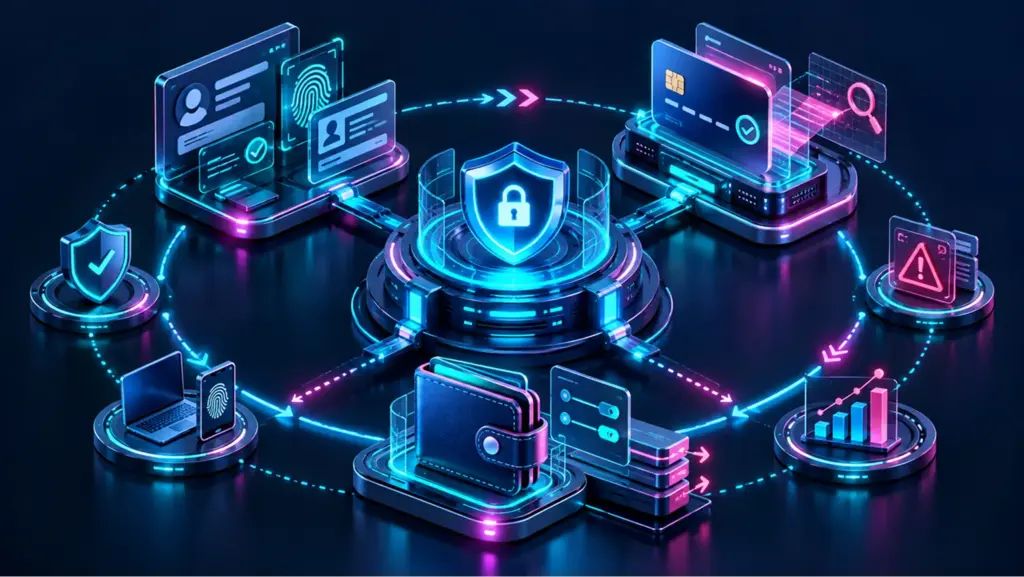
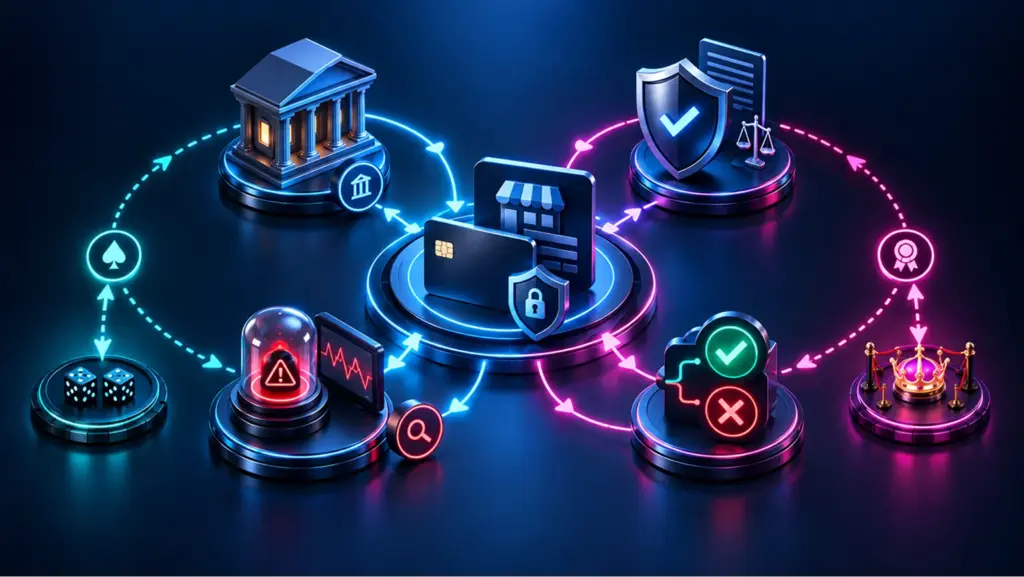
When a customer taps his or her phone to pay for coffee on the go, or swipes their card to buy a product online, it is a complex ballet that happens in milliseconds. This is the world of payment transaction processing, an unseen utility that has grown as indispensable to international commerce as electricity. At its heart, understanding what payment processing means – the secure transfer of funds from payer to payee – is essential for any organization that operates today.
This all-encompassing manual unravels the labyrinth of payment processing technology. We will examine its core features including front-end and back-end processors, deconstruct the ecommerce payment process flow, and analyze important security features like PCI DSS compliance as well as tokenization security. Additionally, we’ll examine current trends, including the onset of real-time payments (RTP) and stablecoin-driven payments, and peer into how AI-based fraud detection is altering the world of 2026 and beyond.
The History of Payment Technology, From Coins to Cryptocurrency
Understanding payment processing requires a look back at its long evolution – a trajectory that has always sought new ways of increasing convenience, trust, and efficacy.
- Early Foundations (Pre-20th Century)
Commerce was based on barter, then precious metal coinage and finally paper money (a Chinese invention around the seventh century). Paper money was first seen in Europe in the 17th century, with banknotes forming early check-like notes.
- The Financial System Modernizes (1900-1950)
Central banking systems, such as the U.S. Federal Reserve system established in 1913, provided a more stable framework for currency and credit.
- The Plastic Revolution (1950-1990)
The charge card arrived in 1950 with the debut of the Diners Club card and then came American Express’s plastic credit card in 1959. The introduction of the magnetic stripe in the 1970s standardized how card data was stored and read, significantly improving the speed and reliability of card-based payments. The first Automated Clearing House (ACH) networks (capable of bank accounting transactions around 1974), were set up thereby allowing for large-scale electronic bank-to-bank transfers through batch-based clearing systems such as ACH during 1978 by the Federal Reserve Bank of Boston.
- The Digital and Online Epoch (1990s to the 2010s)
With the arrival of the Internet, it was necessary to have a secure way to make transactions via the internet. This was the era of the birth of online payments giants such as PayPal (1998), when important security standards we now take for granted like the Payment Card Industry Data Security Standard (PCI DSS) were established. EMV chips, long over and down to the wire in their rollout, were also rolling out, significantly reducing in-person counterfeit fraud.
- The Mobile & Cloud Revolution (2010-Present)
Phones became wallet tools with services such as Apple Pay and Google Wallet. The cloud enabled businesses to adopt payment processing in a SaaS model. Data was secured: Tokenization, Point-to-Point Encryption and more became the norm.
- The Future Horizon (2026+)
Pushed forward by contactless ubiquity, adoption of stablecoin payments, use of AI to detect FP and global deployment of real-time payment rails.
The Architecture of Digital Payments: Who Does What in a Transaction
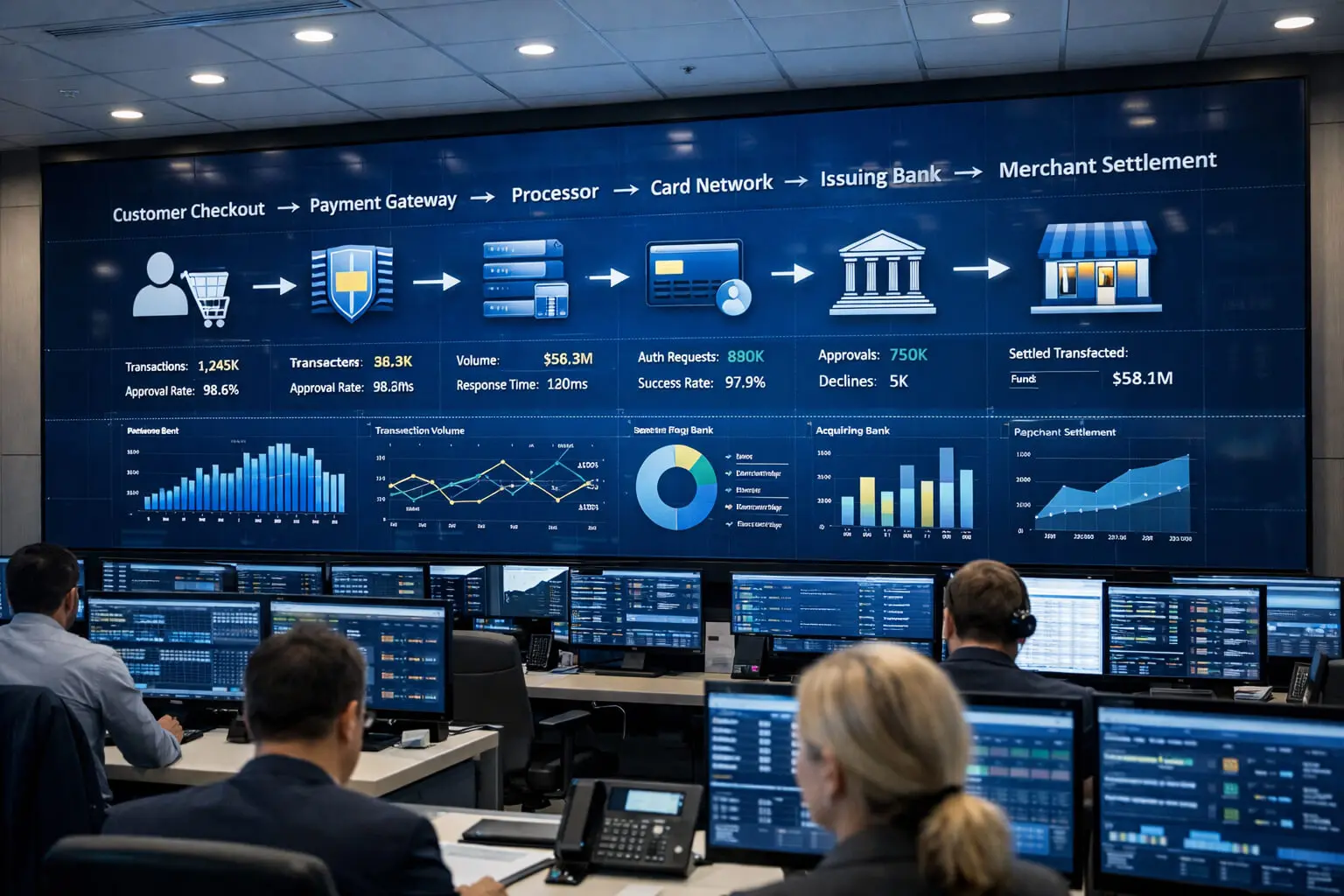
To move money from a customer to a business electronically, a chain of distinct intermediaries must work in unison. Here is an explanation of each participant’s specific duties within that chain:
- The Retailer (Vendor): The entity offering merchandise or charging for services.
- The Purchaser (Account Holder): The person who uses a payment card to finalize a transaction.
- The Gateway Interface: This software acts as the initial capture point. It takes the financial details entered by the purchaser, converts them into a secure format, and delivers them to the next stage in the chain. This tool is the first checkpoint for adhering to PCI DSS security protocols.
- The Transaction Operator (Processor): A service that functions as a traffic controller for data. It receives the encrypted information from the gateway and ensures it reaches the appropriate card scheme and banking institutions for authorization.
- The Card Association (e.g., Visa, Mastercard): A governing body that provides the framework and regulations for transferring value. It manages the communication highways that connect the merchant's bank with the cardholder's bank to validate and move funds.
- The Merchant's Bank (Acquirer): The financial house that maintains the retailer's account. It initiates the transaction request into the wider network and, upon completion, is responsible for adding the funds to the vendor's balance.
- The Cardholder's Bank (Issuer): The financial institution that provides the credit or debit card to the consumer. It conducts the risk assessment, either granting or denying the transaction based on the account status, and later generates the invoice that the customer must pay.
Front-End vs. Back-End Processors: A Critical Distinction
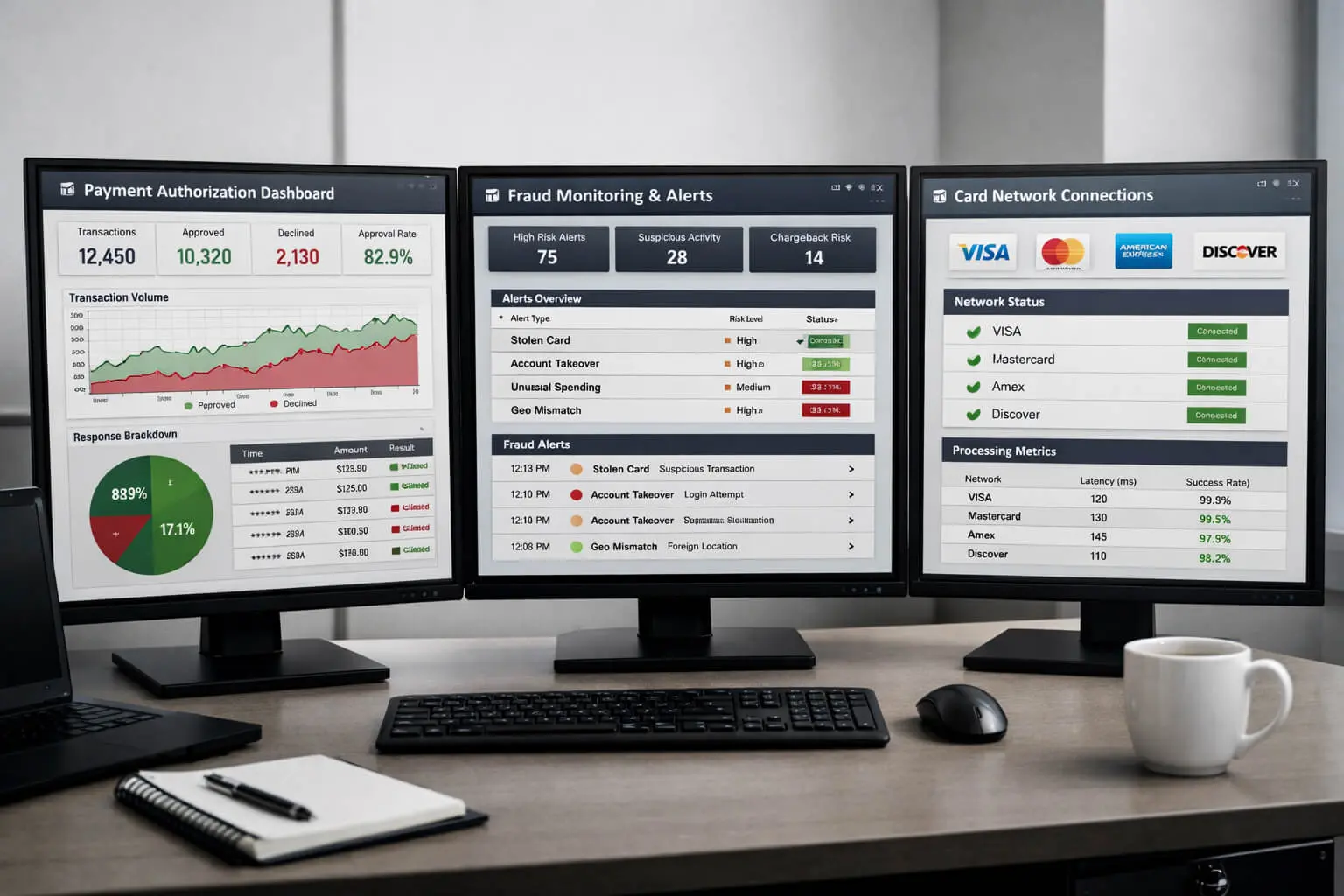
The term “payments processor” often encompasses two distinct functions, sometimes handled by separate entities:
| Feature | Front-End Processor | Back-End Processor |
|---|---|---|
| Primary Role | Authorization. Handles the initial real-time communication with card networks and issuing banks to get an “approval” or “decline.” | Settlement & Funding. Manages the back-end settlement process after authorization, including batch clearing, funding the merchant’s account, and handling ACH transfers for payouts. It also coordinates with the issuer as a billing processor to ensure accurate customer statements. |
| Key Function | Real-time fraud screening, connection to card networks. | Cross-border settlements, detailed reporting, reconciliation, and fee management. |
| Analogy | The security guard checking an ID at the door. | The accountant who reconciles the books and transfers the money at the end of the day. |
Modern full-service providers like Stripe or Adyen integrate both front-end and back-end functions into a seamless platform, simplifying the process for merchants.
How Payment Processing Works: A Step-by-Step Breakdown
Follow the Short Online Credit Card Transaction Journey It can be really helpful to outline a specific online credit card transaction so you can see where these moving parts fit into real-world ecommerce payment workflow.
1. Onset
Customer clicks “Buy Now” They enter their credit/debit card details on a secure checkout page.
2. Encryption & Sending
Sensitive card details are tokenised or encrypted by the payment gateway then sent to the payment processor via the payment gateway.
3. Authorization Routing
The processor passes the transaction information to the applicable card network (such as Visa), which forwards it to the issuing bank of your customer.
4. Authorization Request
The issuing bank checks some stuff: is the card valid, does the customer have enough money for this, and do AI models for fraud discover risk in a few milliseconds. It then approves or declines.
5. Response
The approval (Approval Code or Decline) is returned down the network and processor to the gateway.
6. Completion
The gateway tells the website, “Success” or “failure”.
7. Batching & Clearing (End of Day)
The merchant’s processor batches the day’s approved transactions. The processor transmits these batches to the card network, in which a batch can be settled with other batches.
8. Funding (1-3 Business Days After)
The issuing bank sends funds to the acquiring bank – less interchange – and that amount is then placed in the merchant’s account. This final stage, known as paid processing, confirms that the funds have successfully moved from the customer to the business.

Security: The Non-Negotiable Foundation (PCI DSS, Tokenization, AI)
With great convenience comes great risk. Protecting financial data is paramount.
- PCI DSS Compliance
This is not a suggestion but a mandatory contract for any business handling card data. It comprises 12 core requirements for securing data, maintaining firewalls, and implementing access controls.
- Tokenization
This security method replaces sensitive Primary Account Numbers (PANs) with a unique, random “token.” The token is useless if intercepted, as it cannot be reverse-engineered outside of the secure payment system. This is central to tokenization security for storing cards for future purchases.
- End-to-End Encryption (P2PE)
Data is encrypted at the point of capture (e.g., the card reader) and remains encrypted until it reaches the secure decryption environment of the processor.
- The Role of AI in Fraud Detection (2026 Outlook)
Modern fraud detection systems now use adaptive machine learning models that analyze transactions in real time, improving accuracy while reducing false declines. This allows for near-instantaneous approval of legitimate transactions while identifying sophisticated, evolving fraud patterns with high accuracy, reducing false declines which harm customer experience.
Case Study: Payment Processing for a Small E-commerce Business
Scenario: “Bloom & Groom,” a small business selling artisanal pet accessories online, averages 150 orders/month with an Average Order Value (AOV) of $65.
- Challenge: Need a simple, secure, and cost-effective way to accept online payments without deep technical expertise.
- Solution: They choose an integrated SaaS platform (like Shopify Payments or a Stripe integration). This bundles the payment gateway, payment processor, and merchant account into one.
-
Workflow:
- Customer checks out on Bloom & Groom's Shopify store.
- Shopify's built-in gateway securely collects card data.
- Shopify acts as the payment processor, handling authorization and routing.
- Funds from sales are settled, minus a clear, blended processing fee (e.g., 2.9% + $0.30 per transaction), into Bloom & Groom's business bank account.
- Benefits: Simplified setup, predictable pricing, built-in PCI DSS compliance, and easy reconciliation. The owner can focus on products and marketing, not on managing complex payment processing relationships.
Trends Shaping Payment Processing in 2026 and Beyond
- Ubiquity of Real-Time Payments (RTP): The global expansion of real-time payment (RTP) rails is making instant, 24/7 bank transfers the new norm.
- Vertical-Specific Processors: Expect more specialized payments processors offering tailored workflows, analytics, and integrations for niches like SaaS subscriptions, healthcare, and legal services.
- Consolidated Checkout & Embedded Finance: The ecommerce payment workflow will become even more frictionless with embedded finance – where payment, lending, and banking options are integrated directly into a merchant’s platform.
Choosing the Right Payment Partner: Why Modern Businesses Need Integrated Solutions
To weather the complexity of modern-day payment processing, which now encompasses elements like compliance issues with PCI DSS and fraud detection AI, all the way through to cross-border settlements management, a business needs more than just your run-of-the-mill processor. As a business you need a partner that offers an easy-to-implement, secure and future-proof ecommerce payment integration across the purchase process. This is the arena of full fledged platforms like BillBlend.
BillBlend’s key is that it helps reconcile the disconnected payments landscape for verticals, including high-risk or fast-growing businesses. Key advantages include:
- One-stop Gateway & Processing
Streamlines front-end authorization and back-end settlement, to save the administrative burden of using different processors.
- Powerful Risk Management
Take advantage of next-gen fraud detection AI and tokenization security to maintain the highest possible approval rates while minimizing chargebacks, a must for maintaining growth.
- Global & Niche Knowledge
Streamlines cross-border payment settlements, and enables various kinds of payment methods such as up-to-date stablecoin payments that match all kinds of industry needs.
- Purpose-Built to Scale
If you are a smaller business like our “Bloom & Groom” case-study or a growing enterprise, the platform is adaptive so that payment processing scales with efficiency and cost-effectiveness.
Single POS is designed to ensure adaptability and long-term innovation for our secure payment terminals. Contact the BillBlend team now to schedule a personalized consultation about how our platform can solve your unique payment problems and enable you to capture more revenue.

FAQ
How long will it take to process my payment?
Less than or equal to 2-5 seconds. However, the funds do not typically settle in a merchant’s account for 1-3 business days after the transaction. This distinction is central to understanding the payment processing meaning – authorization happens instantly, but final settlement takes time.
What’s the difference between front-end and back-end processors?
Think of the front-end processor as «approving» in real time – it communicates with the payment network processor (such as Visa or Mastercard) to route authorization requests to the issuing bank. The «accounting» is handled later by the back-end processor – the back end of settlement, clearing in batches and ultimately moving money from bank to bank. The two functions are often combined in contemporary practice.
How will AI be better in fraud detection than it is now?
Our current AI platforms for fraud detection are more predictive, more adaptive. They’ll process complex, cross-channel streams of customer behavior in real time, employ deep learning to detect newly emerging patterns of fraud and draw down balancing fraud prevention with the goal of minimizing false declines in balance with the wider goal of minimizing false declines – and they’ll do this at a pace that human-defined rules could never match.
What is the top security standard for merchants?
PCI DSS (Payment Card Industry Data Security Standard) is a baseline of security that cannot be negotiated. And with good reason – any merchant who stores, processes or transmits cardholder data must meet its security standards to safeguard against fines and breaches.
Is ACH payment processing the same as an ACH transfer?
Yes. ACH transfers, a type of electronic payment processing, send funds directly from one bank account to another and are typically used for direct deposit or bill pay, along with business-to-business transactions. They are batch-processed and generally slower but less expensive than card network transactions.