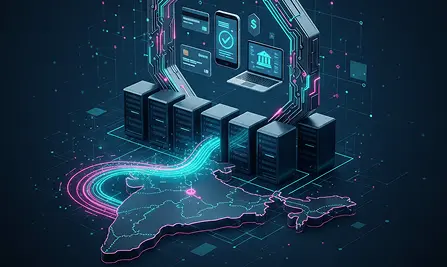

The speed of transactions is becoming a key advantage in the calculations of international companies. Now Instant cross border payments is no longer a luxury – it is a necessity that changes business processes and allows businesses to compete in new markets.
What are instant cross-border payments?
Cross-border payments are financial transactions carried out between parties located in different countries. These transactions include a wide range of settlements:
- payment for goods and services to foreign suppliers;
- receiving cash inflows from foreign buyers;
- transferring salaries to employees working abroad;
- private transfers to relatives living outside the sender's country of residence.
Until recently, such settlements were carried out mainly through traditional banking infrastructure, such as correspondent networks and the SWIFT system. This method was characterised by significant time costs (usually 3–5 business days), high commissions, and the need to go through numerous stages of control and currency conversion.
However, the development of digital technologies has led to the emergence of a fundamentally new format: cross-border instant payments. Today, such transfers are made in a matter of minutes, often even around the clock, opening up completely new horizons for businesses of all sizes.

Technologies shaping the future of financial flows
Modern solutions are based on cutting-edge technologies:
- API integration: allows you to instantly connect payment instruments to your internal management systems.
- Blockchain and distributed ledgers: guarantee security, transparency and high transaction processing speeds.
- Artificial intelligence: automates compliance checks (KYC/AML), minimising the human factor and speeding up procedures.
- Local payment infrastructures: integration of national systems speeds up payments and reduces fees.
Advantages of instant cross-border payments for businesses
The use of innovative instruments brings tangible benefits to businesses in a number of areas.
The use of innovative instruments brings tangible benefits to businesses in a number of areas.
The ability to respond quickly to suppliers’ needs, which helps to obtain early payment discounts in a timely manner. Reduction in the time it takes to receive sales revenue, improvement in liquidity indicators. Significant reduction in dependence on credit lines and overdrafts.
Expansion of geographical presence
Small and medium-sized businesses get the chance to enter the international market without significant initial investment. It becomes possible to offer customers a convenient payment method that is familiar to a particular country. Creation of competitive advantages through fast service and favourable terms.
Significant reduction in operational risks
Losses caused by currency fluctuations during long waits for transfers to be completed are eliminated. The risks of partners failing to fulfil their contractual obligations due to technical delays are minimised. Errors that arise when manually checking large numbers of documents are eliminated.
Increased customer satisfaction
24/7 availability of payment services. Immediate feedback on the status of the transaction. Clear fee structure and no hidden costs. Support for multiple currencies and payment methods.
Popular modern solutions for instant cross-border payments
Today, there are a number of effective tools that allow businesses to take advantage of immediate transfers:
- SWIFT gpi (Global Payments Innovation) – an improved version of the classic SWIFT system, providing real-time payment tracking and fast crediting of funds on most routes.
- National instant payment systems – such as the British Faster Payments, Brazilian PIX, Indian UPI and others, which combine the efforts of local regulators and commercial organisations.
- FinTech company platforms – specialised services that use the latest technologies to reduce fees and increase transaction speeds.
- Stablecoins and cryptocurrencies – digital assets backed by real currencies, allowing for almost instant transfers without the involvement of traditional banking infrastructure.
- Visa Direct and Mastercard Send card payment system services – provide fast transfers of funds directly to the bank cards of individuals and legal entities around the world.

Industries that benefit most from instant payments
Some areas of activity are particularly susceptible to changes in cross-border transactions:
- E-commerce. Reduction in the number of uncompleted orders caused by long waits for payment confirmation, fast payment of rewards to affiliates and contractors.
- International logistics and supply chains. Ability to accurately plan production and delivery of products thanks to guaranteed timely payments.
- Consulting and professional services. Immediate invoicing and payment for services rendered, strengthening of partnerships.
- Gig economy and freelancing. Ensuring fair remuneration for contractors regardless of their geographical location.
- Export and import operations. Simplify document flow and speed up settlements with foreign buyers and suppliers.
Want to experience the convenience of instant cross-border payments? Try BillBlend, our API-integrated platform that provides transfers in 70+ currencies with transparent rates and 24/7 support. Sign up for a free consultation to learn how we can simplify your international payments.
How to implement instant cross-border payments
Step-by-step algorithm:
- Step 1. Evaluate your needs. Identify transaction volumes, currencies, and target markets. Identify the key requirements – speed, cost, and compliance with regulations.
- Step 2. Select a provider. Compare the commissions, supported countries, and integration opportunities. Evaluate the security measures – encryption, fraud detection. Check for compliance with AML/KYC and GDPR requirements.
- Step 3. Integrate API solutions. Work with the IT team or a third‑party developer to integrate the provider's API into ERP/CRM systems. Test in sandboxes to ensure a smooth data flow.
- Step 4. Train the staff. Provide training on new workflows, dispute resolution, and fraud prevention. Appoint a compliance officer to monitor regulatory updates.
- Step 5. Run and monitor it. Start with a pilot program for low-risk transactions. Track key indicators: percentage of successful transactions, average processing time, and customer reviews. Scale up after the integration issues are fixed.
Hotels and airlines can issue instant refunds or vouchers, reducing inconvenience for customers.
Real implementation cases
PayNow‑UPI (Singapore–India). The technology is compatible between Singapore’s PayNow system and India’s Unified Payments Interface (UPI). The advantage is instant transfers by phone number without the need to specify bank details. The effect is a 40-60% reduction in transaction costs compared to traditional methods, and popularity for money transfers and small B2C.
IXB (EUR–USD instant payments). The participants are EBA Clearing and SWIFT, more than 25 financial institutions. Using SWIFT and EBA RT1 infrastructure for round–the-clock EUR-USD transfers. Advantage – calculations in seconds with full tracking and guaranteed intraday liquidity Effect – introduction by multinational corporations to pay salaries and finance supply chains — reduction of processing time from 2 days to <30 seconds.
Сhallenges of cross border instant payments
Risks of cross border instant payments:
- Liquidity Management for Banks — Real-time settlements require careful liquidity planning to ensure funds are available in different jurisdictions.
- Fraud and Cybersecurity Risks — Accelerated transactions increase vulnerability to fraud, phishing, and unauthorized access. Reliable authentication methods are needed (biometrics, multi-factor authentication).
- Regulatory compliance is mandatory compliance with AML/KYC and GDPR requirements, while differences in regulation across countries complicate control.
- Technical failures — System failures or integration errors can disrupt payments, requiring backup protocols.
- Limited global coverage — Not all countries support instant cross-border systems, creating gaps in service availability.
Do you have any more questions?
Fill out the form and we will contact you
*By submitting this application, you consent to the processing of your personal data in accordance with the privacy policy.
Conclusion
The volume of real-time payments will triple by 2030, with the growth of instant cross-border by 223%. Central bank digital currencies (CBDCs) are already emerging, ISO 20022 standards are being implemented, and embedded financial services and intelligent payment routing are developing.
Teal-timecross-border transactions are not just a technical trend, but a fundamental change in the approach to doing business. Companies that are the first to master this technology will gain significant advantages:
- Better prices through optimisation of currency transactions.
- Flexible financial management and increased operational stability.
- High customer loyalty thanks to convenient and reliable service.
The era of waiting several days for international transfers is coming to an end. Those who adapt now will lead the new era of seamless global trade.
Frequently asked questions
What is the difference between instant and regular fast payments?
Real-time payments are made in minutes, often around the clock. Fast payments take 1-2 business days through updated classic networks.
Are instant payments more expensive?
No, many fintech platforms offer competitive rates that are significantly cheaper than traditional banking services.
Are instant transfers secure?
Yes, leading providers use enhanced data protection, encryption and multi-step user identification.
Can an instant payment be cancelled if there is an error?
In most cases, cancellation is not possible after confirmation. Check the details carefully and choose trusted partners.
Are instant transfers supported everywhere?
The level of support varies. Developed economies (EU, USA, Asia) are leading the way, with others actively catching up. Find out in advance what options are available in the countries you need.
How do instant payments help you save on currency?
Such services offer favourable exchange rates close to market rates and make commissions transparent, allowing you to avoid hidden losses.