Innovation in Payments Technology

Innovation in Payments Technology

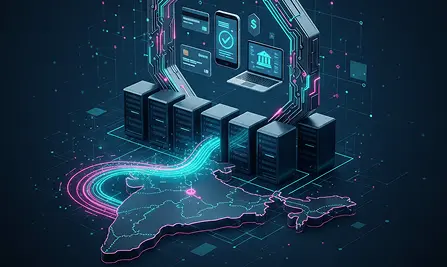
Modern technology is rapidly changing the landscape of global commerce, and payment innovations are playing a key role in this transformation. Payment innovations in financial technology (fintech) are opening up new business opportunities by reducing costs, speeding up processes and improving transaction security.
This article examines eight innovative payment technologies that are having a significant impact on the global economy and international trade relations. These trends are shaping the future of finance and commerce, offering businesses the flexibility, speed and reliability they need to succeed in a globally competitive environment.

Do you have any more questions?

Fill out the form and we will contact you

*By submitting this application, you consent to the processing of your personal data in accordance with the privacy policy.

Mobility in payment transactions

Mobility has long been an integral part of the financial sector. This trend allows customers to pay for goods and services anytime and anywhere, whether they are shopping at home or attending street fairs. The key tools here are mobile cash registers – portable devices capable of issuing cheques anywhere. They are compact monoblocks with a display, built-in printer and fiscal storage, battery-powered and connected to the Internet via SIM card or Wi-Fi. Functionally, these cash registers are identical to their stationary counterparts, but their portability makes them ideal for restaurants, delivery and street vending.

Personalisation in customer service

Maximum personalisation of the customer experience is critical to customer retention. It is achieved in a number of ways:
These measures allow you to create unique offers that match each customer’s preferences.

Want to provide maximum personalization and a comfortable payment experience for your customers? Connect to the reliable payment gateway Billblend.

Payment by instalments (BNPL)

Buy Now Pay Later (BNPL), which allows customers to pay for goods in equal instalments, has gained popularity between 2023 and 2024. This scheme benefits both parties: the seller receives full payment at once, while the buyer makes payments gradually, according to a set schedule, such as fortnightly or monthly.
The advantage of BNPL for sellers is an increase in the average cheque by 40%, an increase in sales of expensive goods and an increase in customer loyalty. This technology has been successfully applied on marketplaces and will be extended to other areas of e-commerce and offline sales.
Payment by instalments makes the purchase process more comfortable for consumers, avoiding significant one-time expenses, while providing sellers with stable income and expanding their customer base.

Development of mobile services

Mobile shopping will continue to gain momentum in 2025. Over the past five years, there has been a growing trend of shoppers shopping online. A large proportion of users prefer to select goods and services via smartphone rather than PC. Therefore, it is important for companies to:
Internet acquiring will be a key element to ensure that payments are accepted via applications and websites.

Cashless payments

The younger generation increasingly prefers cashless payment methods, which requires businesses to adapt. Two options can be offered for customer convenience:

We have worked with the Pix system in Brazil. You can read the details of the payment setup here.

Artificial intelligence in payment systems

Artificial intelligence is being actively used in various aspects of payment processes, including payment processing automation, fraud detection, customer service, personalisation and transaction data analysis. Biometric authentication is also becoming an important part of security.
Many countries around the world have already developed roadmaps for integrating AI into the banking sector. Somewhere this has been done at the government level, somewhere as a private initiative. It is impossible to turn a blind eye to the active implementation of neural networks in fintech.

Bioacquiring - a new era in payment protection

Bioacquiring is a payment system that uses biometric data to identify the user. It offers a high level of security, convenient and fast transactions, and a clean process. Biometrics are difficult to spoof, making it more reliable than traditional methods such as PINs. The convenience of paying with a single touch or glance speeds up the process and improves the customer experience.
However, bio-acquiring comes with high implementation costs, dependence on technology and privacy concerns. The need for stable internet and device compatibility limits the use of the system. Possible technical failures are also a concern.
Despite these drawbacks, bioacquiring has the potential to increase customer loyalty and improve personalisation of interactions.

Digital currencies

The popularity of cryptocurrencies has forced governments around the world to recognize the need to improve financial instruments by introducing payment innovation and adapting to new market conditions..
A new trend has emerged: the launch or exploration of digital currencies. These are similar to cryptocurrencies, but are issued by a country’s central bank. More than 50 countries are currently exploring the possibility of introducing digital national currencies, including Vietnam, Egypt, Indonesia, the UAE, the US, South Africa and the eurozone countries.

Conclusion

Innovation in payments technology continues to change global commerce, providing businesses and consumers with more opportunities to interact internationally. Blockchain technologies, mobile payments, digital currencies, biometric authentication and IoT integration are significantly impacting the efficiency and security of trade transactions.

The future of global commerce is inextricably linked to the development of fintech, and companies that can rapidly implement advanced payment solutions will have a competitive advantage in the global marketplace. At BillBlend, we are committed to helping businesses determine which solutions are right for their customers and their business. Contact us to find out more.

Answers to Frequent Questions

What is payment transaction mobility?
It is the ability to pay for goods and services anywhere and anytime using mobile checkouts.
It includes multi-channel payment, loyalty programmes and fast payment processing, which improves customer interaction.
Customers pay for goods in equal instalments and sellers receive the full amount at once. This is convenient and stimulates sales.
Most customers prefer to make purchases via smartphones, so it is important to adapt to mobile devices.

They are becoming popular due to the immediacy and support for local payment methods, which facilitates international transactions.

11

Do you have any more questions?

Fill out the form and we will contact you

*By submitting this application, you consent to the processing of your personal data in accordance with the privacy policy.

Did you like the post? You can share it!

Did you like the post?
You can share it!

Programmer and developer with over 20 years of experience.

Author's assessment

Leave a comment:

Table of Contents

Other publications

Answer 5 questions and find out the cost

By clicking on the button, you agree to the data protection policy

Contact us

By clicking on the button, you agree to the data protection policy

Complete the quiz

By clicking on the button, you agree to the data protection policy