Forex Payment Gateway: Guide

Table of Contents
The speed, liquidity and trust in the forex industry are unmatched. Most brokerages have a complicated payment structure, which has to deal with a high volume of trades, different types of currencies as well as strict KYC requirements and elevated risk. A forex payment gateway is far more than just a checkout – it’s an integral touchpoint that impacts every trading customer experience, directly interacts with the compliance environment and fundamentally affects broker revenue streams.
With globalization and evolving trading models, Forex payments are transforming from simply adding a deposit method to reshaping the financial ecosystem.

The Forex Market Context: Why Payments Matter More Than Ever

The Forex market remains the largest and most liquid financial market globally, with daily trading volumes exceeding $7.5 trillion, according to the Bank for International Settlements (BIS). While trading itself happens off-chain and within broker platforms, nearly all user activity begins and ends with payments: deposits, withdrawals, and internal transfers.
Several factors are increasing pressure on payment infrastructure:
For brokers, the payment layer is now inseparable from client acquisition, retention, and risk management.

What Is a Forex Payment Gateway?

A forex payment gateway is a dedicated layer for brokers that enables them to accept, process, and manage deposits and withdrawals across multiple payment methods and currencies. Unlike traditional eCommerce gateways, forex-specific solutions have to cater for the following:
As a result, forex brokers operate under very different payment requirements compared to standard retail or subscription-based businesses.

Unique Risks in Forex Payment Processing
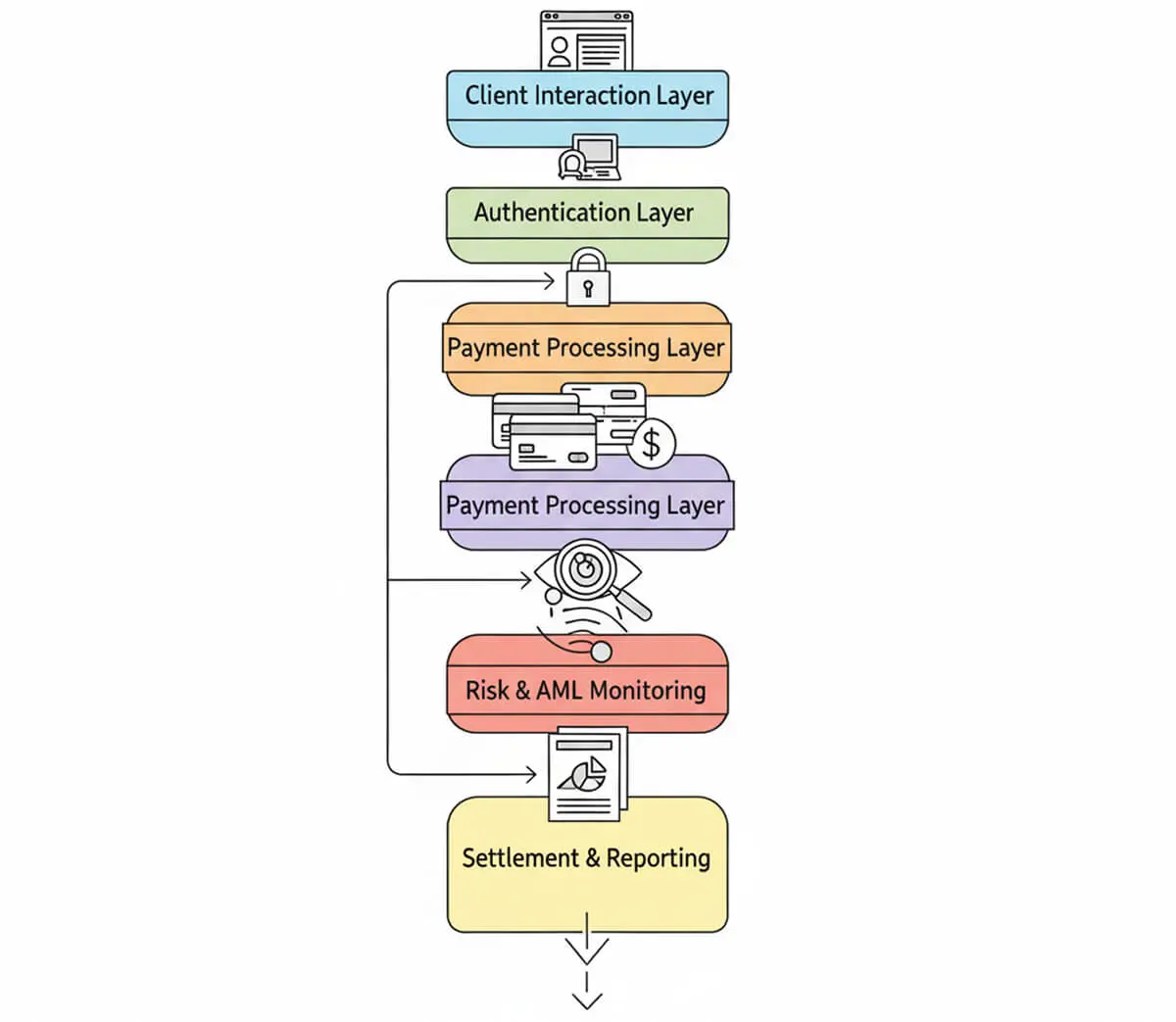
Forex is widely categorized as a high-risk vertical, and payment gateways must be designed accordingly.

High Chargeback Exposure

Trading losses, market volatility, and customer disputes often translate into higher chargeback rates. Gateways must support proactive monitoring and dispute workflows.

Regulatory Complexity

Forex brokers operate across jurisdictions, each with its own AML, KYC, and reporting obligations. Payment infrastructure must adapt to local requirements without fragmenting operations.

Cross-Border and Currency Risk

Handling deposits in one currency and withdrawals in another introduces FX risk management challenges, especially when settlement delays occur.

Fraud and Abuse

Forex platforms are frequent targets for account misuse, identity manipulation, and transaction abuse, making fraud detection in forex a core requirement.
Forex/CFD-related products are treated as high-risk in many jurisdictions, with stricter conduct and disclosure expectations, as reflected in FCA guidance and policy on CFDs.

Key Capabilities of Modern Forex Payment Solutions
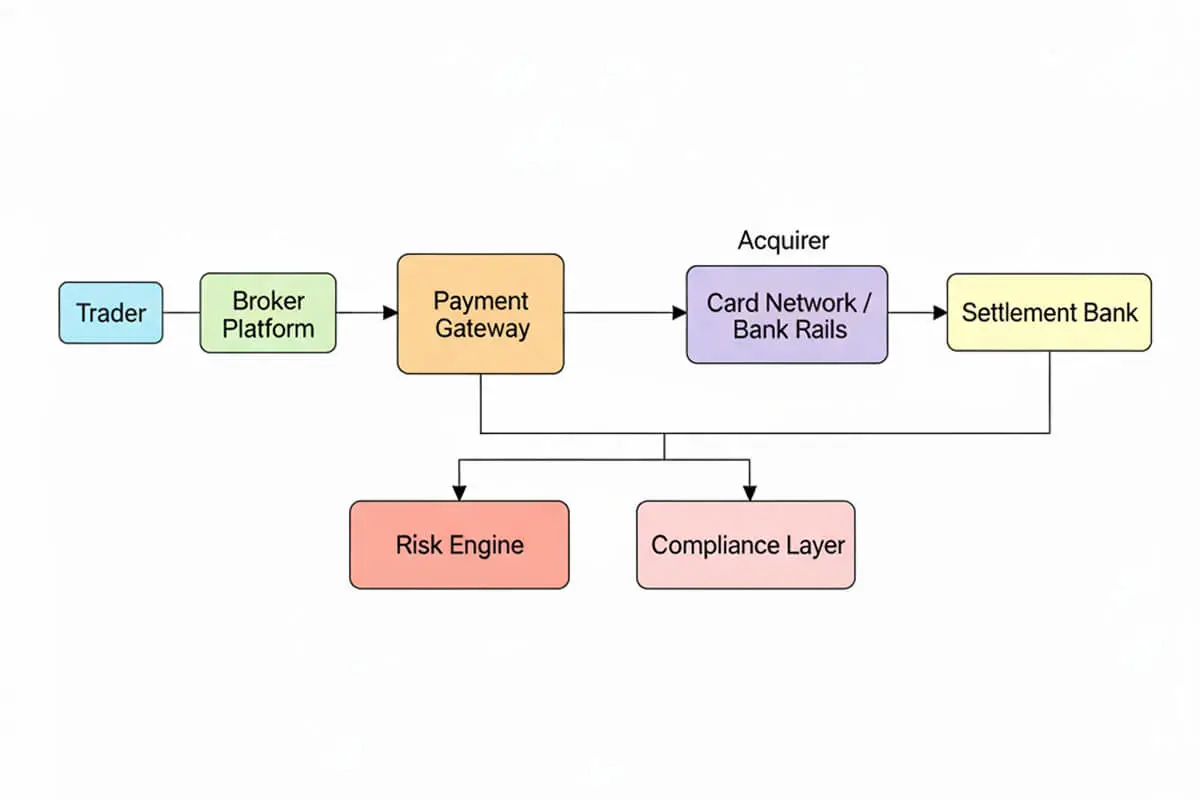
A robust gateway should provide more than basic transaction routing. Core capabilities include:
Without these features, brokers often face operational bottlenecks as volume grows.

If your brokerage is handling high volumes, multiple currencies, and strict compliance requirements, it’s worth reviewing whether your current payment setup can scale safely. Leave a request via the Contact Us form to discuss how connecting the BillBlend payment gateway can support secure, compliant, and efficient transaction processing for forex operations.

Integration and API Considerations

For modern trading platforms, integration quality is as important as payment coverage.
APIs integration for payments enables brokers to:
Well-documented APIs reduce development time and lower the risk of transaction errors, especially during peak trading periods.

Top Forex Payment Gateways 2026

As forex platforms scale across regions and currencies, payment gateways are increasingly judged not just by coverage, but by how well they handle risk, compliance, and operational complexity. In 2026, the leading forex payment gateways share a few common traits: strong API infrastructure, high approval rates, support for high-risk flows, and experience working with regulated trading businesses.
Below is an overview of payment gateways commonly used by forex brokers and trading platforms.
Payment GatewayBest Fit ForKey StrengthsPayment Methods Supported
BillBlendForex brokers needing tailored gateway setupsHigh-risk focus, flexible integration, compliance-aware processingCards, bank transfers
AdyenLarge, regulated forex brokersUnified global acquiring, strong compliance tooling, high reliabilityCards, local methods, bank transfers
Checkout.comHigh-growth, international brokersHigh acceptance rates, flexible APIs, advanced risk controlsCards, alternative methods
WorldpayEstablished financial institutionsDeep acquiring experience, global reachCards, bank transfers
NuveiForex and CFD platformsHigh-risk merchant support, local payment coverageCards, APMs, bank rails
Pay RetailersLATAM-focused brokersStrong regional methods, local processingLocal bank transfers, cards

How to Interpret This List

There is no single “best” forex payment gateway for every broker. The right choice depends on:
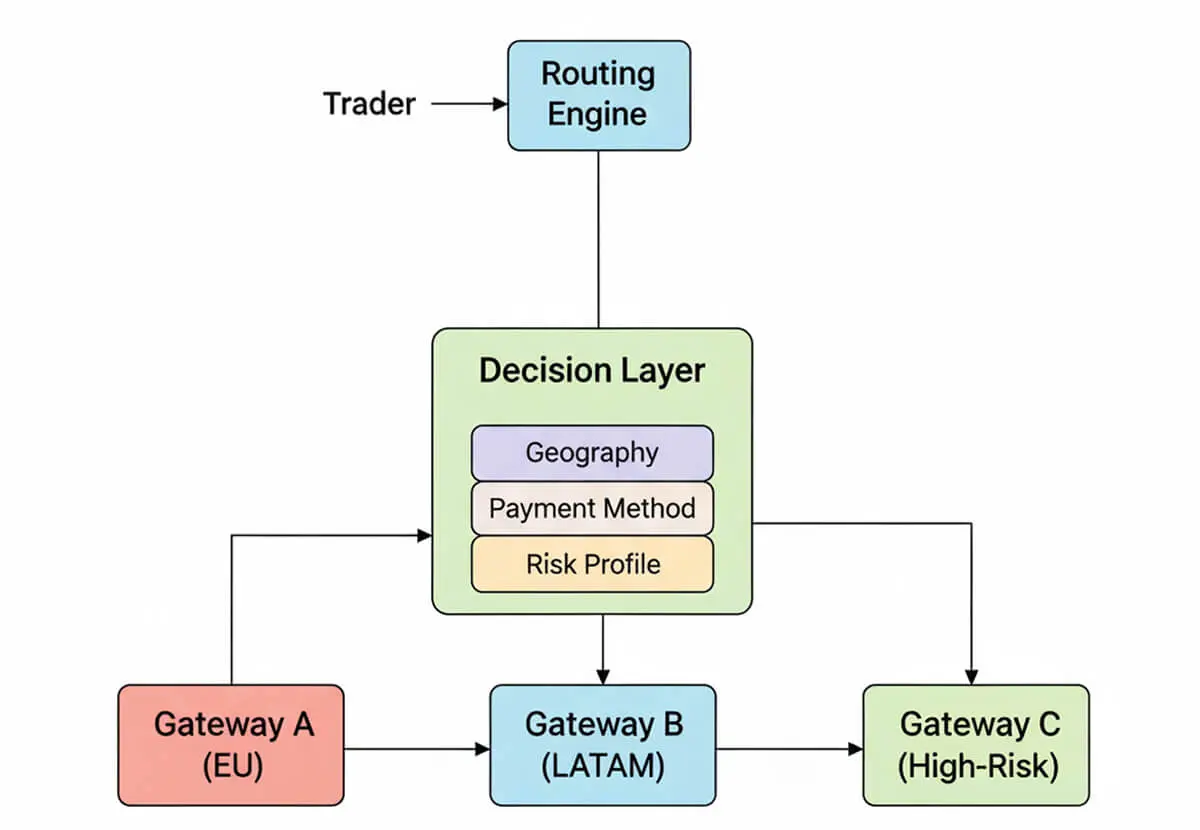
Many brokers ultimately use more than one gateway, routing transactions by region, method, or risk profile to improve approval rates and operational resilience.
In 2026, competitive forex platforms treat payment gateways not as interchangeable tools, but as core infrastructure partners that directly influence conversion, liquidity, and regulatory posture.

Comparing Forex Payment Gateways: BillBlend and Market Alternatives

Choosing the right provider requires comparing more than just pricing. Below is a conceptual comparison of common gateway models used by forex brokers.

CriteriaBillBlendTraditional GatewaysCrypto-Focused Gateways
Forex-specific risk handlingStrongLimitedVariable
Multi-currency supportExtensiveModerateCrypto-centric
Compliance toolingBuilt-inOften externalLimited
API flexibilityHighMediumHigh
Cross-border forex solutionsNativeFragmentedNiche
This comparison highlights why many brokers move away from generic gateways toward providers designed for high-risk forex payments.

Case Example: Scaling Cross-Border Forex Operations

A mid-sized international broker faced slow deposit processing and high abandonment rates in emerging markets. By adopting a gateway with local payment methods and unified reporting, the broker reduced deposit processing times and improved trader onboarding across regions.
The result was not only higher conversion, but lower operational friction for finance and compliance teams – a common outcome when payment infrastructure aligns with trading strategy.

Trends Shaping Forex Payment Gateways in 2026+

The next generation of forex payment solutions is shaped by several structural trends:

Blockchain and Settlement Innovation

Blockchain forex trends are not about replacing trading platforms but more about enhancing the transparency of settlement and reconciliation around cross-border flows.

TrendDescription
Real-Time Payments and Instant AccessTraders increasingly demand instant deposits and withdrawals, driving gateways toward real-time processing and speedier settlement rails.
AI-Driven Risk MonitoringAI-driven anomaly detection and transaction risk analysis brings even better security and experience through machine-learning models.
Hybrid Payment ModelsBrokers continue to mix traditional rails with cryptocurrency forex gateways for flexibility, volatility and compliance management.

Managing FX Risk at the Payment Layer

Payment infrastructure plays a direct role in FX risk management. Delays between deposit acceptance and settlement can expose brokers to currency fluctuations. Advanced gateways mitigate this through:
This reduces both financial exposure and reconciliation complexity.

Final Thoughts

A trading transaction gateway is no longer a background utility. It functions as a strategic layer that shapes growth, risk exposure, and trader confidence. As markets become more global and user expectations continue to rise, brokers that invest in scalable, compliant, and flexible transaction processing solutions gain a clear competitive advantage.
Selecting the right gateway ultimately means aligning transaction infrastructure with long-term trading objectives – both today and in the years ahead.

As forex trading becomes more global and regulatory expectations continue to rise, payment infrastructure plays a decisive role in growth and risk management. To assess how the BillBlend payment gateway fits your trading model and jurisdictional requirements, submit a request through the Contact Us form and get an expert review of your payment setup.


FAQ

What makes trading-related transactions high risk?
Large transaction volumes, frequent disputes, and heightened regulatory oversight contribute to elevated risk profiles.
Yes, if it supports local transaction methods, multi-currency processing, and strong cross-border capabilities.
Critical. APIs enable automation, real-time data updates, and seamless integration with trading platforms.
Some providers offer digital assets as a complementary option, although adoption depends on the regulatory environment.
By embedding AML, KYC, and continuous monitoring tools directly into transaction workflows.
Settlement infrastructure, currency conversion processes, and internal approval workflows.
Absolutely. Slow or unreliable transaction flows are a leading cause of customer churn.
Regularly, especially when expanding into new regions or adding new methods.

Do you have any more questions?

Fill out the form and we will contact you

*By submitting this application, you consent to the processing of your personal data in accordance with the privacy policy.

Did you like the post? You can share it!

Did you like the post?
You can share it!

Programmer and developer with over 20 years of experience.

Author's assessment

Leave a comment:

Table of Contents

Other publications

Answer 5 questions and find out the cost

By clicking on the button, you agree to the data protection policy

Contact us

By clicking on the button, you agree to the data protection policy

Complete the quiz

By clicking on the button, you agree to the data protection policy